
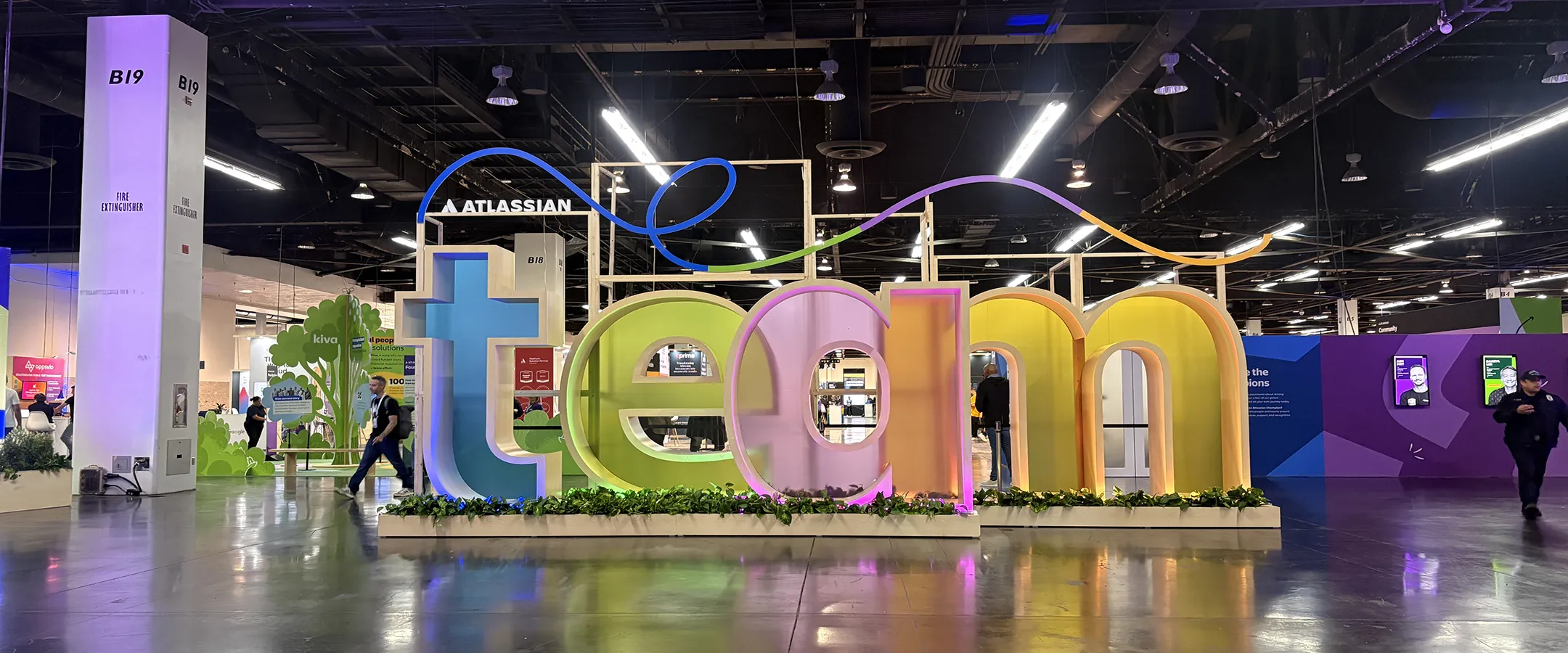
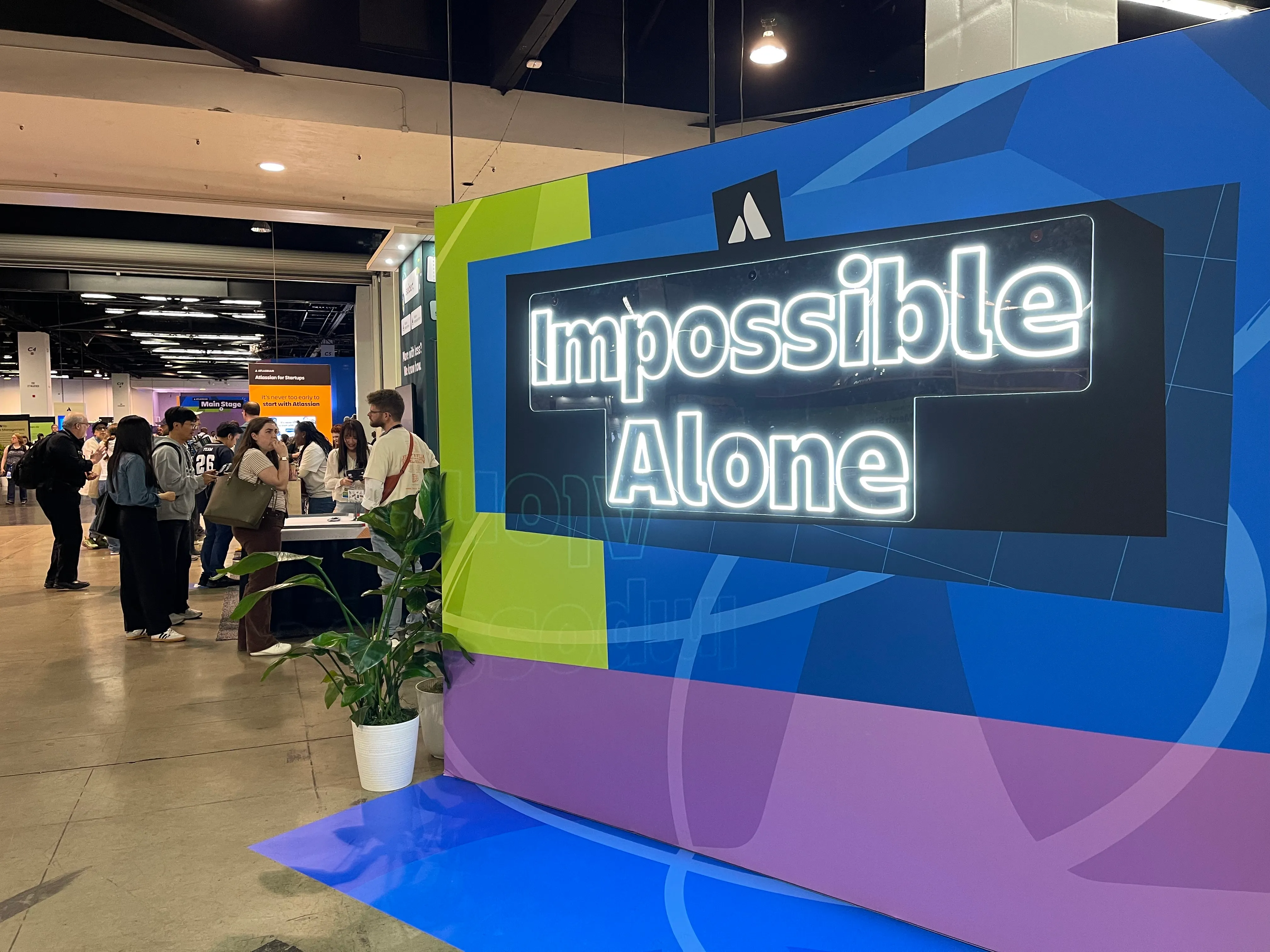
We were on the floor at Atlassian Team ’26, and the headline is this: everything announced at the conference this year only makes sense if you took last year seriously. If you did, the payoff is significant. If you didn’t, here’s why that changes now.
Last Year Was the Setup
Atlassian’s story at Team ’25 was the System of Work: make Atlassian the default platform for all organizational work. Every team, every workflow, every decision running through Jira, Confluence, and the tools around them. Only deviate when a use case genuinely can’t be realized there.
At the time, it read as an ambitious product pitch. Looking back from Atlassian Team ’26, it was the setup for everything that came next.
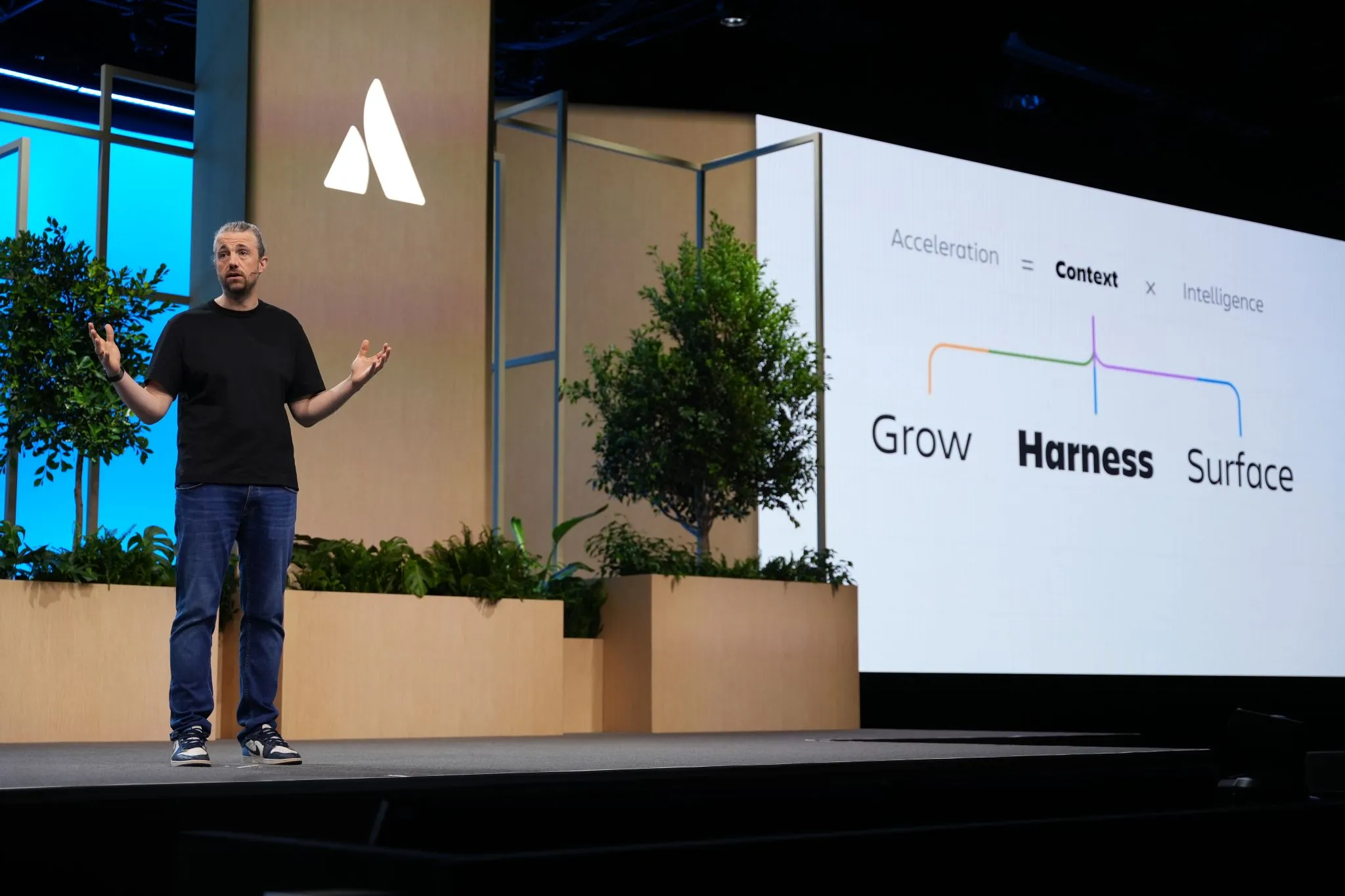
This year’s central formula made the logic explicit: Acceleration = Context × Intelligence. Intelligence, Atlassian argued, is now a commodity. Anyone can buy it. OpenAI, Google, Anthropic, all of them will sell you intelligence at competitive prices, and that price will keep falling. What you can’t buy off the shelf is context: the accumulated knowledge of how your organization works, who owns what, what decisions were made and why, and how every project connects to every other.
That context lives in Atlassian. But only if you’ve been putting it there.
Customers who treated System of Work as optional are effectively locked out of this year’s value proposition. The announcements at Atlassian Team ’26 are compelling, but they’re compounding investments: they multiply what’s already there. Start from a weak foundation, and the multiplier doesn’t do much.
In practice, that foundation means more than having Jira licenses. It means teams actually routing their work through Atlassian rather than managing it in spreadsheets, Slack threads, or email chains. It means documentation living in Confluence, not scattered across personal drives. It means decisions being made in Jira, not in meetings that leave no trace. The organizations that did that work over the past year now have something genuinely valuable: organizational context, at scale, in a structured system that AI can reason over.
Context Is the New Moat
The product that makes this tangible is the Teamwork Graph: a semantic data layer that connects people, projects, tickets, documents, and code into a single living organizational memory. Not a search index, not a database. A layer that understands the relationships between things, not just the things themselves. Who worked on what, which tickets relate to which incidents, what was decided in that Confluence page last quarter.
This year, Atlassian opened the Teamwork Graph to the outside world.
A new MCP server and a CLI with 380+ commands let any external AI tool query your organizational context directly. Claude, ChatGPT, GitHub Copilot, or any coding agent can now pull from your Teamwork Graph in real time, without being inside a Jira or Confluence interface. Atlassian’s own numbers: 44% better answer quality and 48% fewer tokens when AI has access to the graph versus operating without it.
The implication is worth sitting with: your Atlassian data stops being valuable only inside Atlassian apps. It becomes an asset across your entire AI stack.
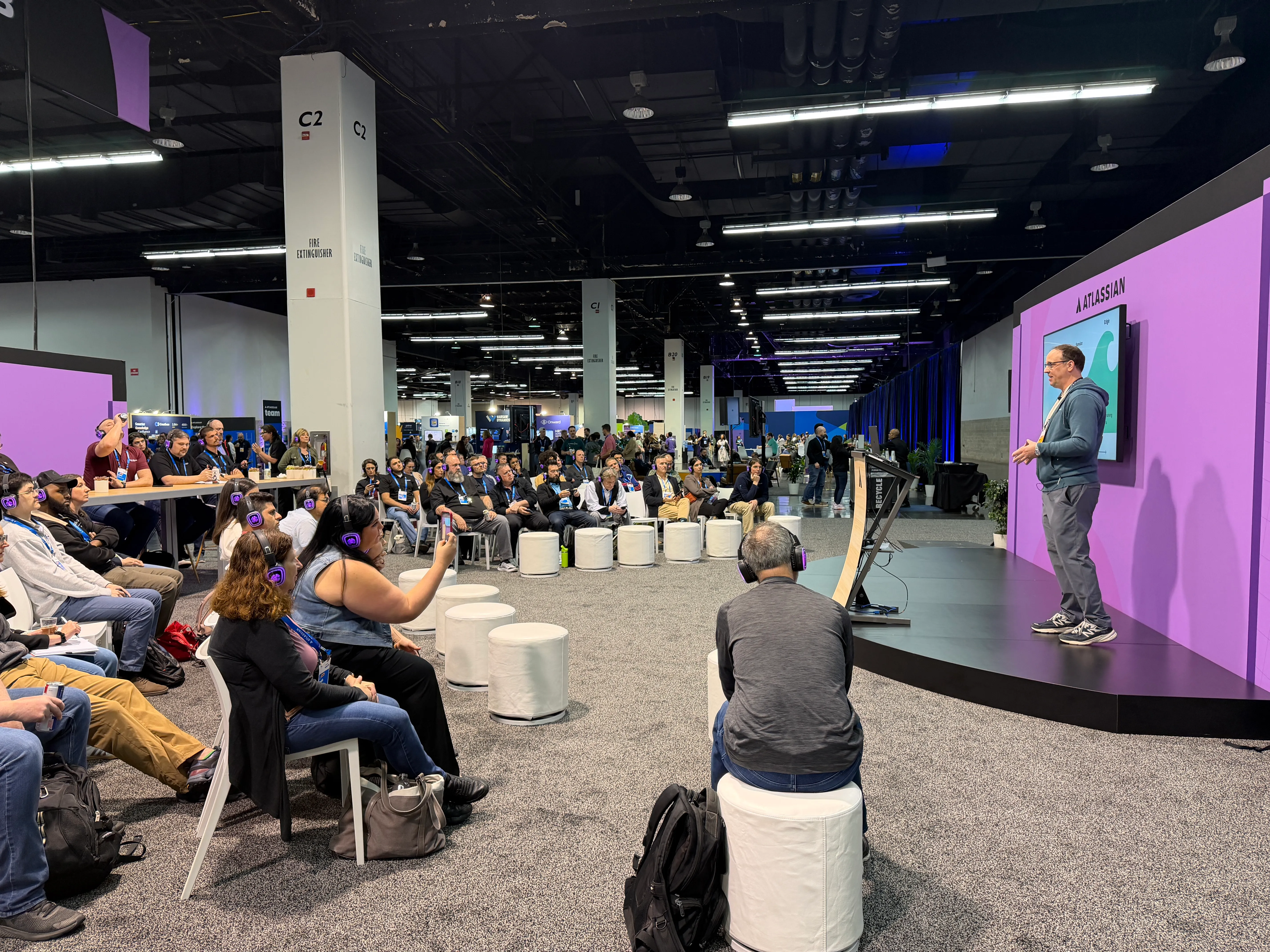
Code Intelligence extends the same idea to source code. It semantically indexes your repositories: not just the file text, but the intent behind it, cross-referenced with the people who wrote it, the projects it belongs to, and the documentation around it. For software teams, it’s a meaningful unlock for code discovery and review. For any AI coding agent operating against your codebase, it’s a direct improvement in answer quality and cost.
The throughline: intelligence without context is generic. Context without structure is noise. The Teamwork Graph is what turns years of Atlassian adoption into a durable competitive advantage.
The Agent Economy Is Live
The most pointed moment at Atlassian Team ’26 was Atlassian’s provocation about AI adoption. Companies can no longer pilot, wait, or run careful experiments. The window for cautious exploration has closed. CEO Mike Cannon-Brookes described sitting on the sidelines as “surrender in slow motion,” and the conference felt built around making that case land.
The shift they’re describing is structural. Humans define intent. Agents handle execution. That’s not a new feature to evaluate: it’s a rearchitecting of how work gets done.
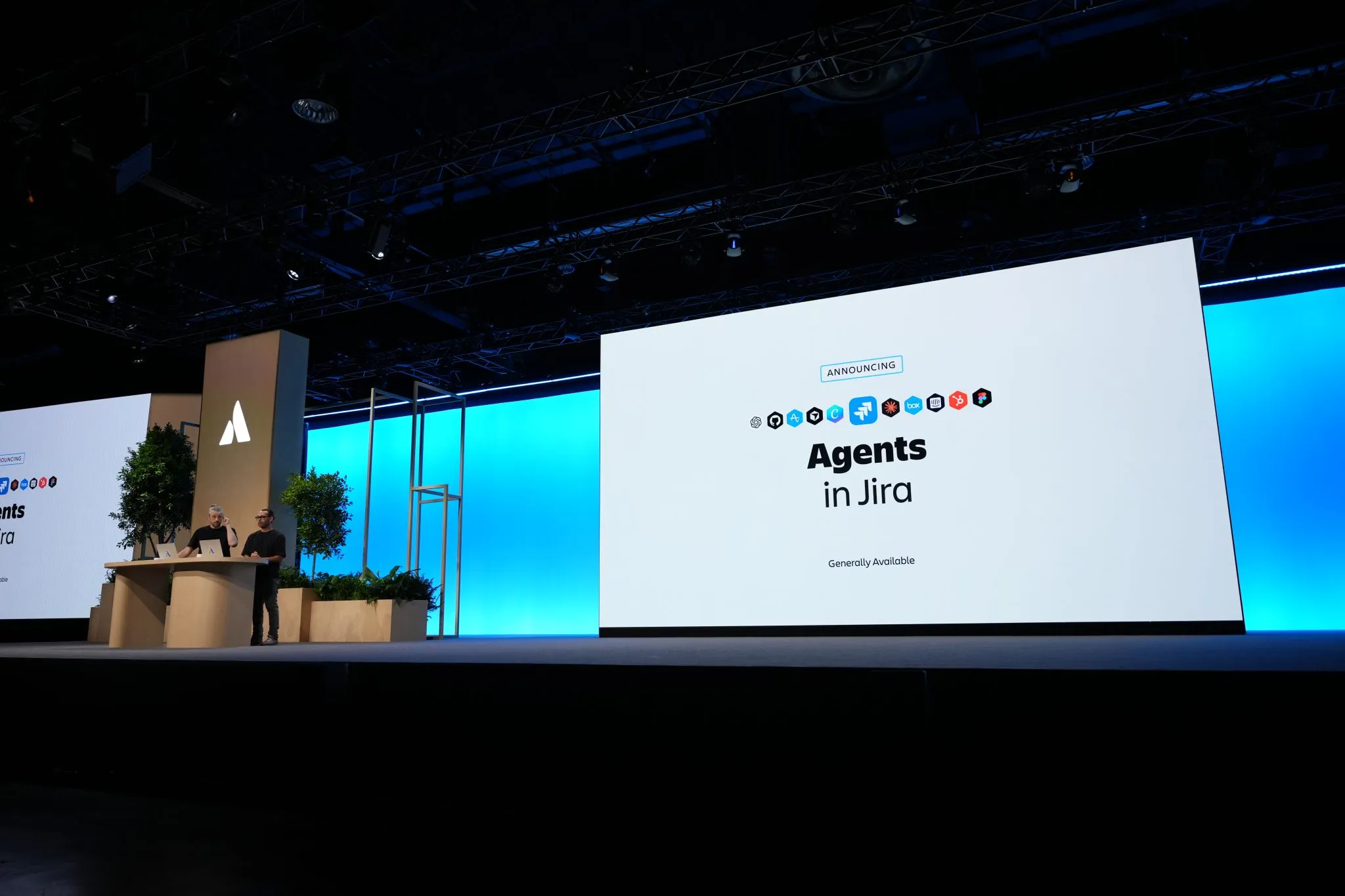
Rovo is Atlassian’s implementation of that vision. It’s the AI layer embedded across Jira, Confluence, and mobile: chat, memory, and agents working together in the same tools your teams already use. Agents in Jira reached general availability at Team ’26, and Atlassian named Claude Code, Cursor, and OpenAI Codex as partner agents already operating in this ecosystem.
The longer-term vision they’re building toward is a multi-agent world: external AI tools orchestrate work across systems, and Rovo agents execute it inside Atlassian. Your coding agent instructs Rovo to create and assign a ticket. Your project management agent asks Rovo to update a Confluence page and flag a dependency. The boundary between “AI assistant” and “team member” begins to blur in practical, day-to-day ways.
For teams that have their workflows and documentation in good shape, this is immediately actionable. For teams that don’t, it’s another reason to get there.
It’s also worth noting what this model requires from organizations: a shift in how you think about trust and delegation. Using AI to draft a Jira description is low-stakes. Giving an agent permission to update tickets, assign work, and flag dependencies across a project is a different category of decision. The organizations getting ahead of this are the ones building clear policies now: what agents are authorized to do, where human review is required, and how accountability works when an agent acts on behalf of a team.
Work Finds You Now
The most unexpected announcement at Atlassian Team ’26 was an acquisition. Atlassian bought The Browser Company and rebranded the product as DIA, now fully enterprise-ready with SSO, SOC 2, and MDM support.
The idea behind DIA is ambient AI: an intelligent layer that doesn’t require you to open an app or type a query. DIA combines your personal browsing context with the Teamwork Graph to proactively surface relevant work, generate personalized daily briefings, and create on-demand web pages based on what you’re looking at. It finds you where you already are: your browser.
This is Atlassian’s bet on the layer beyond their own apps. Knowledge workers spend the majority of their day outside Jira and Confluence. DIA is the answer: bringing organizational context to wherever work actually happens, not just where it gets recorded.
Whether DIA becomes a standard part of the enterprise stack is an open question. But the intent is clear: Atlassian is no longer content to be the place where work is tracked. They want to be present wherever work is done.
What This Means for Your Organization
Every announcement at Atlassian Team ’26 is conditional on the same thing: a strong Atlassian foundation. The Teamwork Graph is only as useful as the data you’ve put into it. Rovo agents are only as effective as the workflows they operate in. DIA’s personalized briefings are only as relevant as the organizational memory behind them.
If you’ve invested in System of Work adoption: you’re better positioned than most organizations right now, and the path to capturing value from this year’s announcements is clearer than you might expect.
If you haven’t: the cost of waiting just got higher. The gap between organizations that made that investment and those that didn’t is measurable in AI capability, and it’s growing.
Either way, this is a good moment to take stock of where you actually stand. Seibert Solutions works with Atlassian customers to maximize their toolstack ROI: whether that means getting adoption right, deploying Rovo effectively, or understanding what the Team ’26 announcements mean for your specific environment. Reach out and let’s talk.