

A leader in food industry mechanics, specializing in weighing machines, faced common challenges in project management. With 450 employees and a sophisticated engineering team, the company sought to optimize its project delivery and documentation processes.
Seibert Solutions partnered with this organization to implement a comprehensive Atlassian Cloud solution, transforming their approach to project management.
Background of the Client
The client designs and manufactures advanced weighing machines critical for the food industry. Their operations involve complex software and mechanical engineering projects, serving major customers like Haribo and Lay’s.
With 200 users using Atlassian’s Jira and Confluence in a Cloud environment, they recognized the need for greater efficiency through a standardized project management system.
The Challenge
The client’s engineering teams struggled with the lack of a centralized, robust project management system. This led to several pain points:
- Resource Management: Difficulty tracking what, who, when, and how much for project tasks, leading to reduced visibility and roadblocks when changes occurred (e.g., team members out sick).
- Inconsistent Documentation and Delegation: Processes, responsibilities, and work delegation were often unclear, resulting in inconsistent documentation across projects.
- Inefficient Project Management: Teams spent excessive time on organizational overhead rather than on value-creating work, hindering lean manufacturing principles and overall productivity. This resulted in “busy-ness” rather than effective “work.”
The Solution
Seibert Solutions collaborated with the client’s engineering leadership to implement a new project management framework with their existing Jira and Confluence instances. This involved a strategic cloud migration for Jira and Confluence, complementing their existing Jira Service Management Cloud deployment.
The core of the solution focused on developing a standardized Customer Project (CP) structure within Jira:
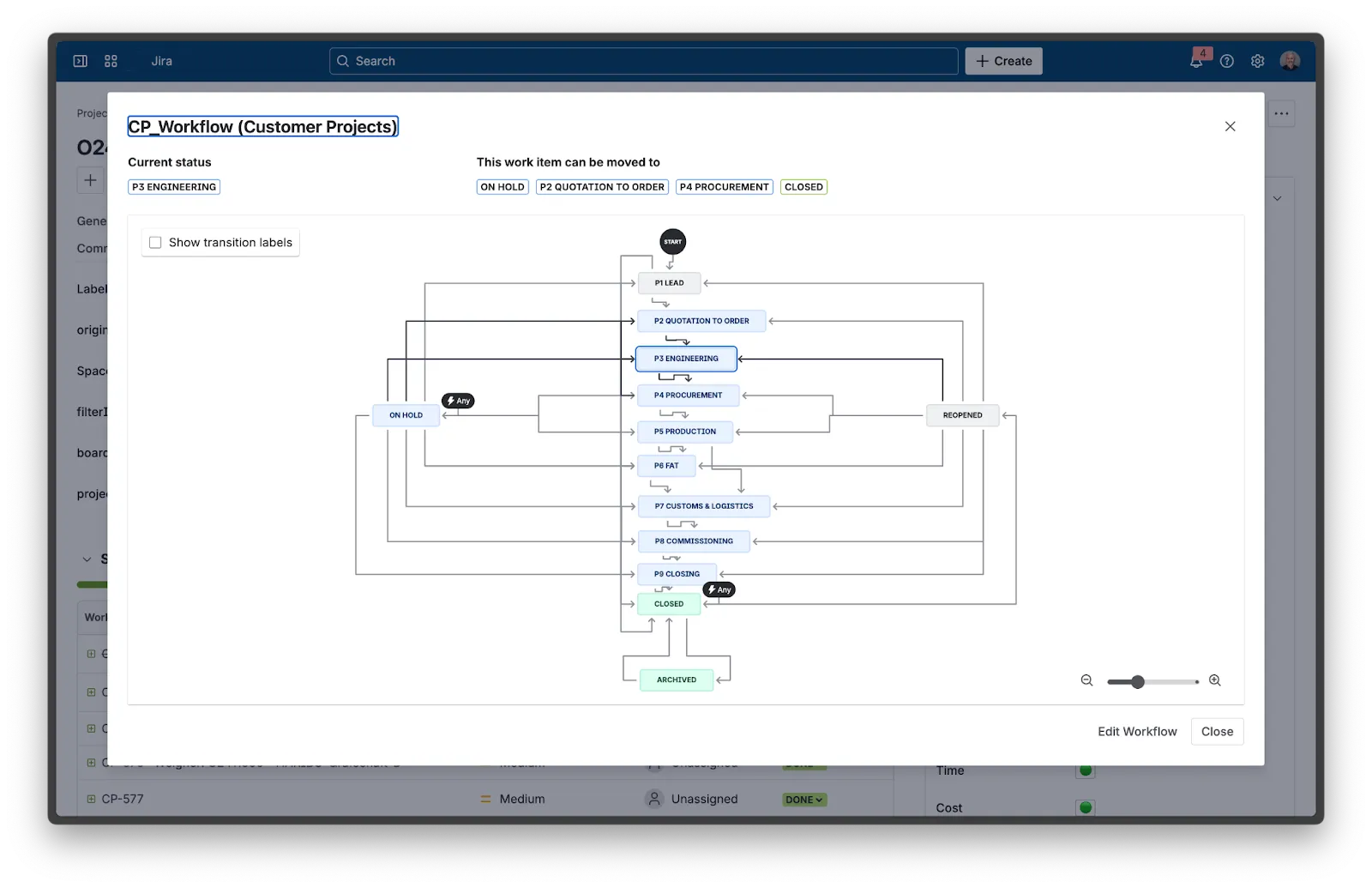
- Master Technical Information: Each CP in Jira was designed to serve as a single ticket holding all master technical information and data for a given customer project. This central repository streamlined access to critical project details.
- Workflow Integration with Company Standards: The workflow for these CP tickets was meticulously designed to mirror the client’s established procedural models. Company standards and best practices were directly linked into the workflow, ensuring compliance and consistency.
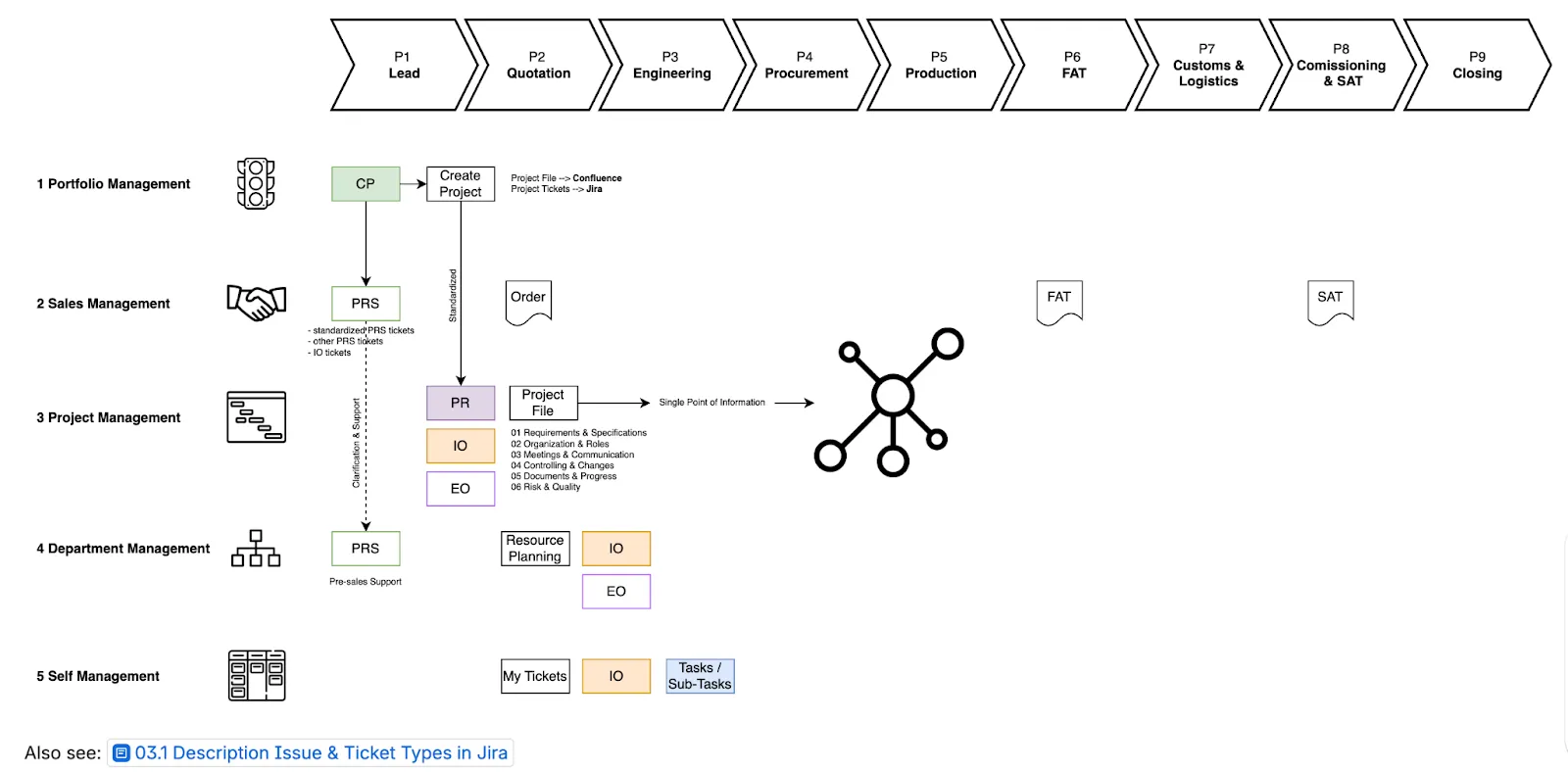
- Integrated Scope Management: The CP structure integrated comprehensive scope management, translating customer requirements into detailed technical specifications and construction plans. This provided a clear, traceable path from initial need to final design.
- Confluence for Collaboration and Documentation: Every project was linked to a dedicated space in Confluence. These spaces served as central hubs for detailed specifications, meeting notes, decisions, and collaborative documentation, ensuring all project stakeholders had access to up-to-date information.
Seibert Solutions acted as a crucial sparring partner, guiding the company’s team leads through the process of clarifying work processes, defining responsibilities, and designing these standardized workflows.
The Results
The implementation of the new Atlassian-based project management system yielded significant improvements for the weighing technology company.
- Single Source of Truth: A single point of information was established for every project, eliminating data silos and ensuring all team members accessed the most current details.
- Standardized Documentation: All projects now follow a consistent documentation framework, improving clarity, reducing errors, and streamlining knowledge transfer.
- Templated Project Creation: The ability to create templated Customer Projects (CPs) for new customers saves time during the initiation phase of new projects, reducing administrative overhead and accelerating project kick-off.
- Optimized Workflows: The successful creation and implementation of standardized project workflows in Jira helped engineering teams get more value-creation work done, and stay accountable.
Moving to a higher project management maturity level can lead to substantial benefits, as organizations spend less time organizing and more time creating. The multi-national weighing technology company has now matured its project management capabilities, directly contributing to more efficient production phases, better resource allocation, and a greater focus on value creation.