

Enterprise Service Management (ESM) is transforming how organizations deliver service across all departments. By extending IT Service Management (ITSM) principles beyond IT, teams in HR, Legal, Finance, and Facilities can automate workflows, improve transparency, and elevate the employee and customer experience.
In this article, we explore concrete enterprise service management examples that show how Atlassian tools like Jira Software and Confluence help organizations scale service excellence outside IT.
HR Use Case: Onboarding a New Hire
Scenario: Jess just accepted an offer to join the marketing team. Her first day is in two weeks—and HR needs to coordinate across IT, Facilities, and Payroll to make it a smooth experience.
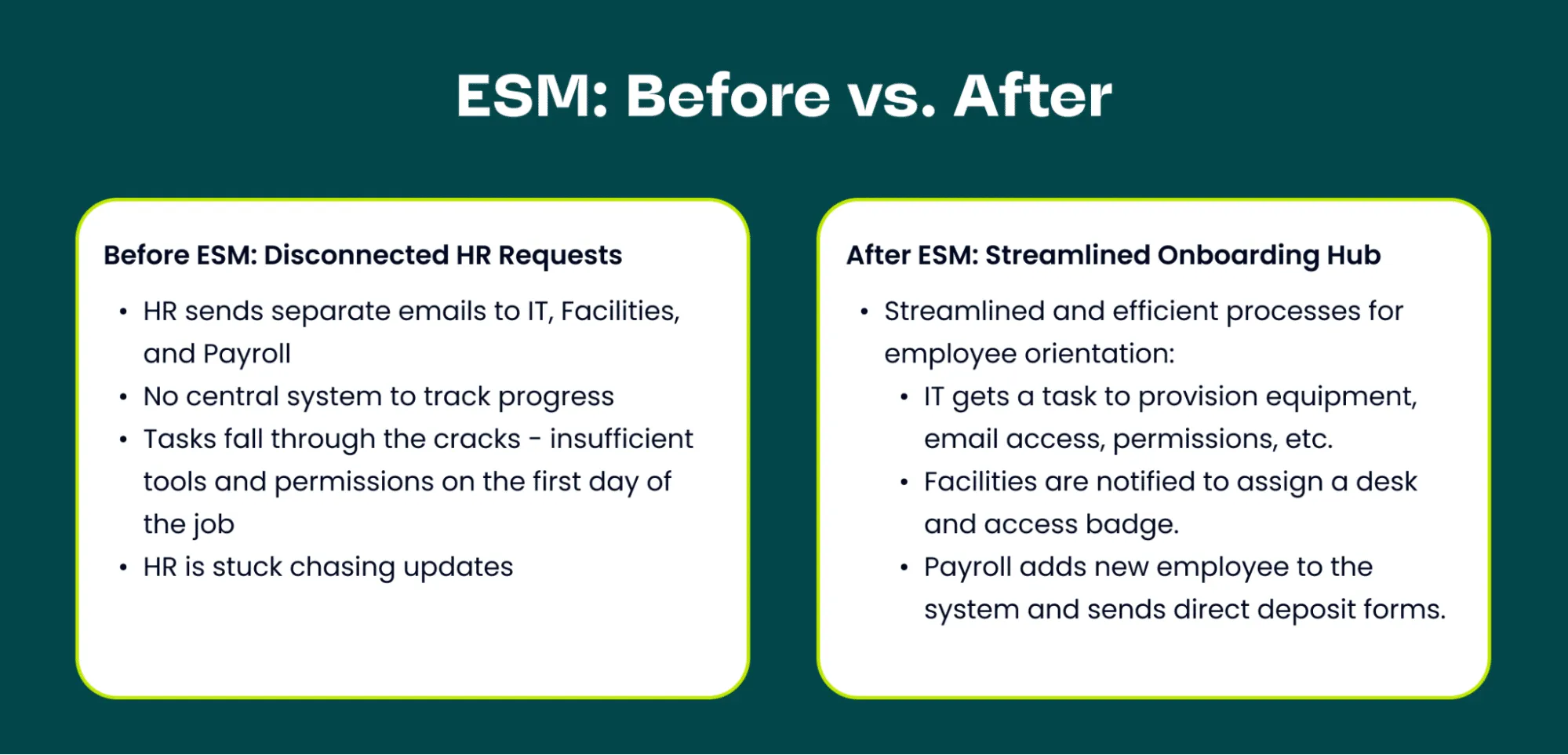
Before ESM (Manual Email Chaos):
- HR sends separate emails to IT, Facilities, and Payroll
- No central system to track progress
- Tasks fall through the cracks
- Jess arrives on Day 1 to missing tools and no desk
- HR is stuck chasing updates
After ESM (Streamlined with Jira Service Management):
Instead of sending scattered email requests and an unprepared first day, Jira Service Management empowers teams across the organization to deliver fast, coordinated, and efficient services all within a single, transparent system.
Within an onboarding portal, HR can select “New Employee: Marketing,” to trigger a predefined workflow:
- IT gets a task to provision a MacBook and set up Slack and email access.
- Facilities are notified to assign a desk and access badge.
- Payroll adds Jess to the system and sends direct deposit forms.
- Meanwhile, Jess receives a Confluence onboarding hub with company values, a welcome video from leadership, and guides on benefits and internal tools.
Every task is tracked in JSM, and HR has a bird’s-eye view of progress. Want to try this ESM setup? Here’s how to use Jira for HR onboarding.
Result: A confident, consistent onboarding experience that makes Jess feel like part of the team before she even steps in the door.
Facilities Use Case: The Coffee Machine is Broken (Again)
Scenario: It’s Monday. The office espresso machine has given up—again. Employees are grumpy. Instead of sending group Slack messages or chasing down someone from the facilities team, employees use the Facilities Request Portal built in Jira Service Management.
They submit a ticket labeled “Appliance Issue > Coffee Machine.” That ticket gets automatically routed to the right technician, who sees it alongside past repair logs tracked in Assets (source: Atlassian). The technician swings by with a new filter that afternoon—and logs the fix.
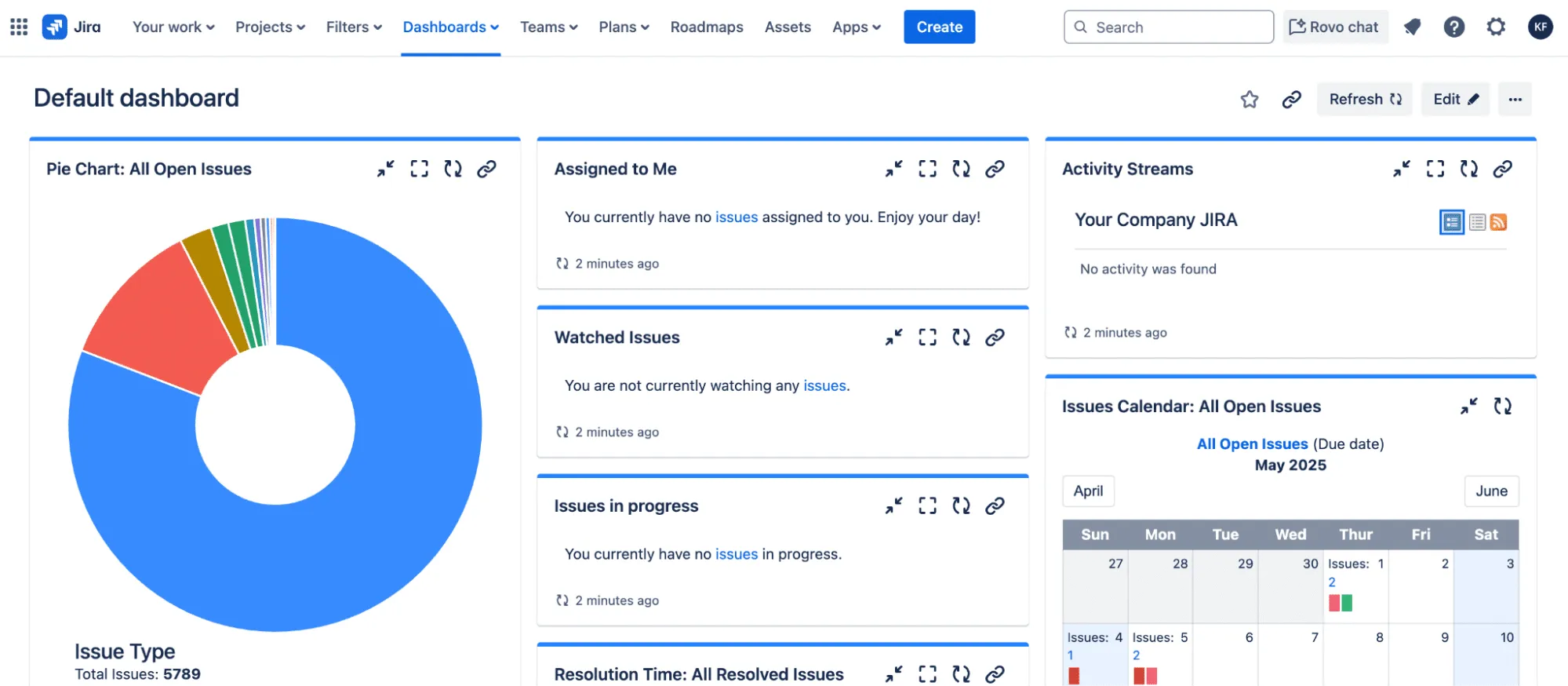
Meanwhile, facilities leadership uses a Jira dashboard to track recurring issues, identify equipment that’s consistently failing, and make a case for upgrading the break room gear.
Result: Quick fixes, zero confusion, and data-driven decisions about office infrastructure.
Legal Use Case: Reviewing NDAs
Scenario: The Business Development team wants to bring on a new partner. Before anything moves forward, they need Legal to review and approve a non-disclosure agreement (NDA).
Using a Jira Service Management legal intake form, the team uploads the draft NDA and fills out basic information (party name, type of agreement, urgency level). This triggers a legal workflow:
- The document moves from “Submitted” to “In Review.”
- A legal analyst reviews and leaves notes.
- A team lead signs off and notifies that it’s approved.
Confluence stores the latest NDA templates and clause libraries, so legal reviewers can easily cross-check for compliance.
Result: Less back-and-forth, faster partner onboarding, and no lost documents.

Finance Use Case: Buying New Software
Scenario: The design team wants to switch from an old graphics suite to a new cloud-based tool. They need approval—and fast.
They head to the Procurement Portal in Jira Service Management. After selecting “New Software Request,” they complete a form with vendor info, estimated cost, and intended users. The workflow routes it to:
- The team manager for initial approval
- Legal for contract review
- Finance for budget validation
Finance uses Assets to check if there’s an existing vendor relationship and sees spending trends via Jira dashboards. Once approved, the designer gets notified and can start using the software right away.
Result: Streamlined purchasing without budget surprises.
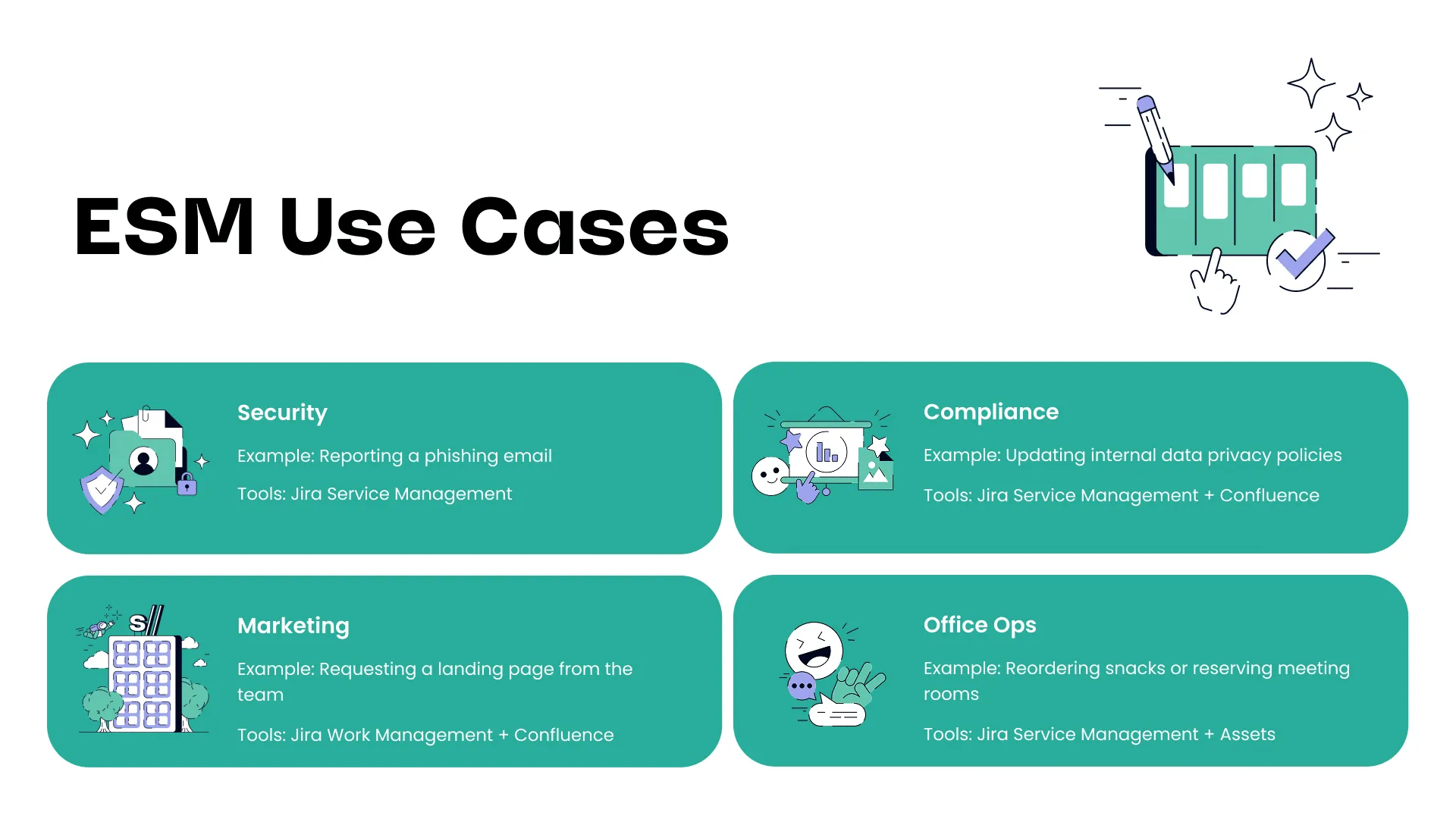
Why This Works: ESM Across Business Challenges
As we explain in our breakdown of ITSM vs. ESM, what makes enterprise service management so powerful is its ability to apply proven IT processes to everyday business challenges.
With Atlassian tools, ESM is easily applied to all business functions. They allow teams to create:
- Easy-to-use request portals (no technical background needed)
- Clear workflows that make responsibilities obvious
- Automated routing so nothing falls through the cracks
- Knowledge bases for repeat questions and onboarding guides
- Real-time visibility into progress and bottlenecks
ESM Isn’t About Software—It’s About People
These enterprise service management examples show how teams work better together. Whether you’re fixing broken office gear, onboarding new hires, or reviewing contracts, ESM transforms reactive service into proactive, people-first workflows.
Want to bring this level of coordination to your business?
Connect with Seibert Solutions US to design ESM solutions tailored to your teams. We help you implement, scale, and optimize Enterprise Service Management—so every department can deliver efficient service.