

Guest post by Yuri Kudyn, Co-Founder, Release Management Apps
For many years, one of Atlassian’s key strengths was its straightforward, tier-based pricing model. Organizations were charged solely based on the total number of users in a Jira instance, offering predictability, transparency, and simplicity in budgeting. That era is ending — and what’s replacing it gives teams far more control over what they pay for.
As Atlassian’s customer base matured, so did the demands placed on its pricing framework. Enterprise environments operate with far greater complexity: sprawling team structures, varied workflows, and inconsistent usage patterns across departments. At the same time, Atlassian’s platform has evolved into a deeply interconnected ecosystem, enabling not only engineering teams but also business, design, operations, and customer support teams — especially with the Service and Strategy collections.
Taken together, these changes — and the strategic shift toward the enterprise segment — made it clear that the traditional pricing model was no longer adequate. Different user groups often depend on different products and collections, yet customers were still required to pay for an entire instance tier regardless of actual usage.
To address this, Atlassian introduced a more adaptable, granular billing approach. The new model is designed to give companies greater control: aligning costs with actual usage and value, optimizing expenses across diverse team needs, and providing far more flexibility in how products are adopted.
As the team behind Release Management Apps, an award-winning vendor on the Atlassian Marketplace, we’ve had the opportunity to participate in Atlassian’s Early Access Program (EAP) for Advanced App Editions. This new category is now rolling out across the Marketplace and is set to reshape how vendors package and deliver capabilities.
In this article, we’ll break down what has already changed, preview what’s coming next, and share our firsthand experience developing the Advanced version of Release Management for Jira. We’ll examine the benefits for customers and the Atlassian ecosystem as a whole.
Deep Dive Into the Actual Changes
In a nutshell, these updates significantly modify how licenses are assigned to different user groups and how payments align with the value delivered by the apps.
This article covers each change in turn:
- Multi-instance licensing
- App editions (tiered versions of apps)
- User-based billing and license coupling to major Atlassian products
- Usage-based billing
- Bundles
Multi-Instance Licensing
For larger customers operating multiple Jira or Confluence instances, licensing has traditionally been a challenge. The same users often participate in workflows across several environments. For example, an employee may work in both an internal service desk instance and an external customer-facing instance.
Under the old licensing model, this user would require two separate app licenses — one for each instance. This meant companies were effectively paying twice for the same user, even though the usage came from a single individual. Consolidating instances to avoid duplicate charges is not always a viable or strategic solution, especially for complex enterprise environments.
We can also look at it from another angle. Mergers and acquisitions are common among enterprises, and while migrating to a single Jira instance — the ultimate goal — can take time, companies still want to realize the benefits of integration early on. As a result, organizations often join each other’s instances and expect this process to be cost-effective.
To address this, Atlassian introduced multi-instance billing: a new capability that allows licensing to be based on the number of unique users across all connected instances, rather than charging per instance. If a user appears in multiple instances, they are counted only once for billing purposes.
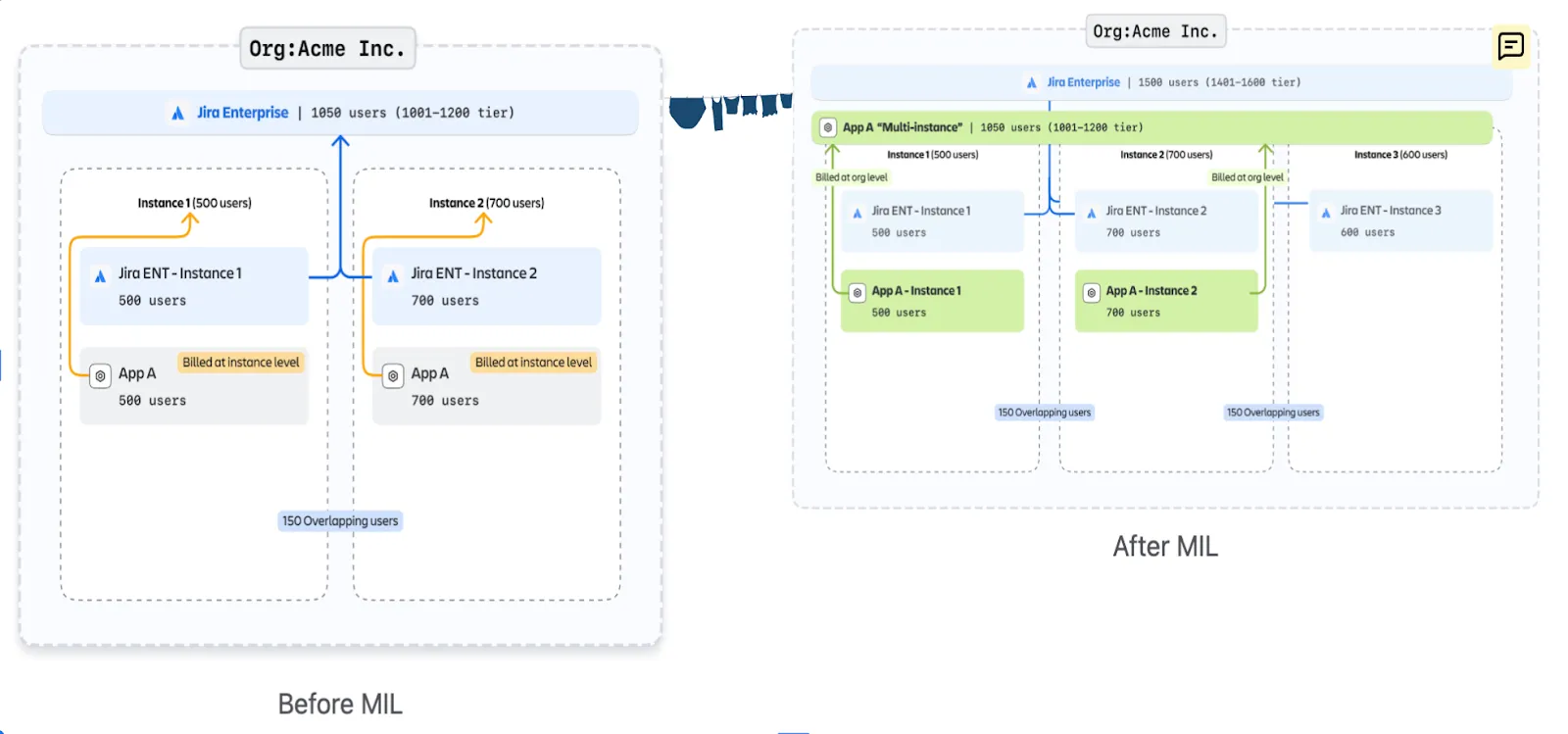
This improvement ensures that:
- Companies no longer pay twice for the same user
- Licensing becomes more aligned with real user value
- Larger organizations with distributed environments benefit from predictable, fairer pricing
This capability will be made available as part of Enterprise plans.
App Editions
When choosing an app, customers often face a trade-off. On one hand, they want powerful functionality that can support complex workflows and future growth. On the other hand, not every team requires advanced capabilities from day one. For smaller or less complex teams, overly sophisticated features can add unnecessary complexity, create confusion, and increase costs without delivering proportional value.
App Editions are designed to solve this challenge from the customer’s perspective.
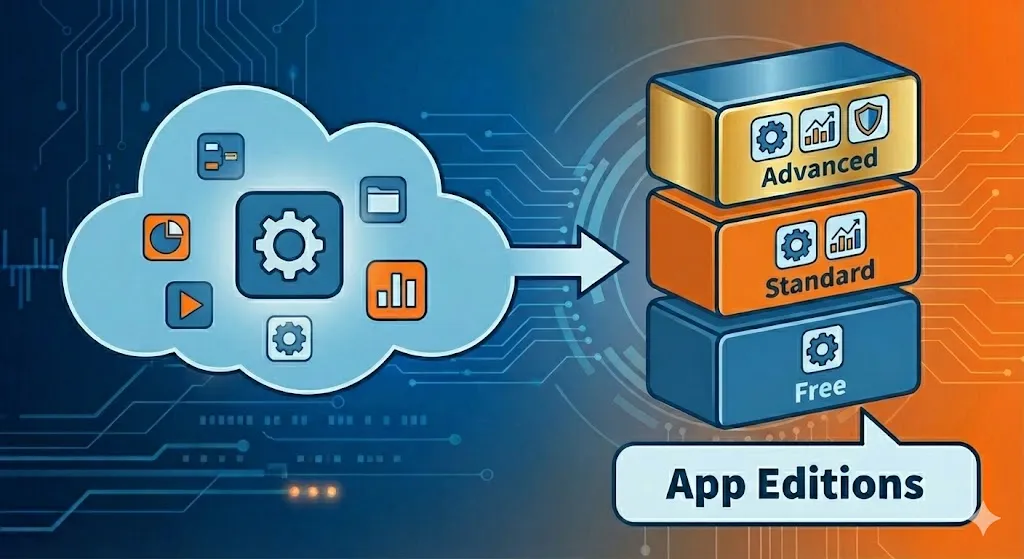
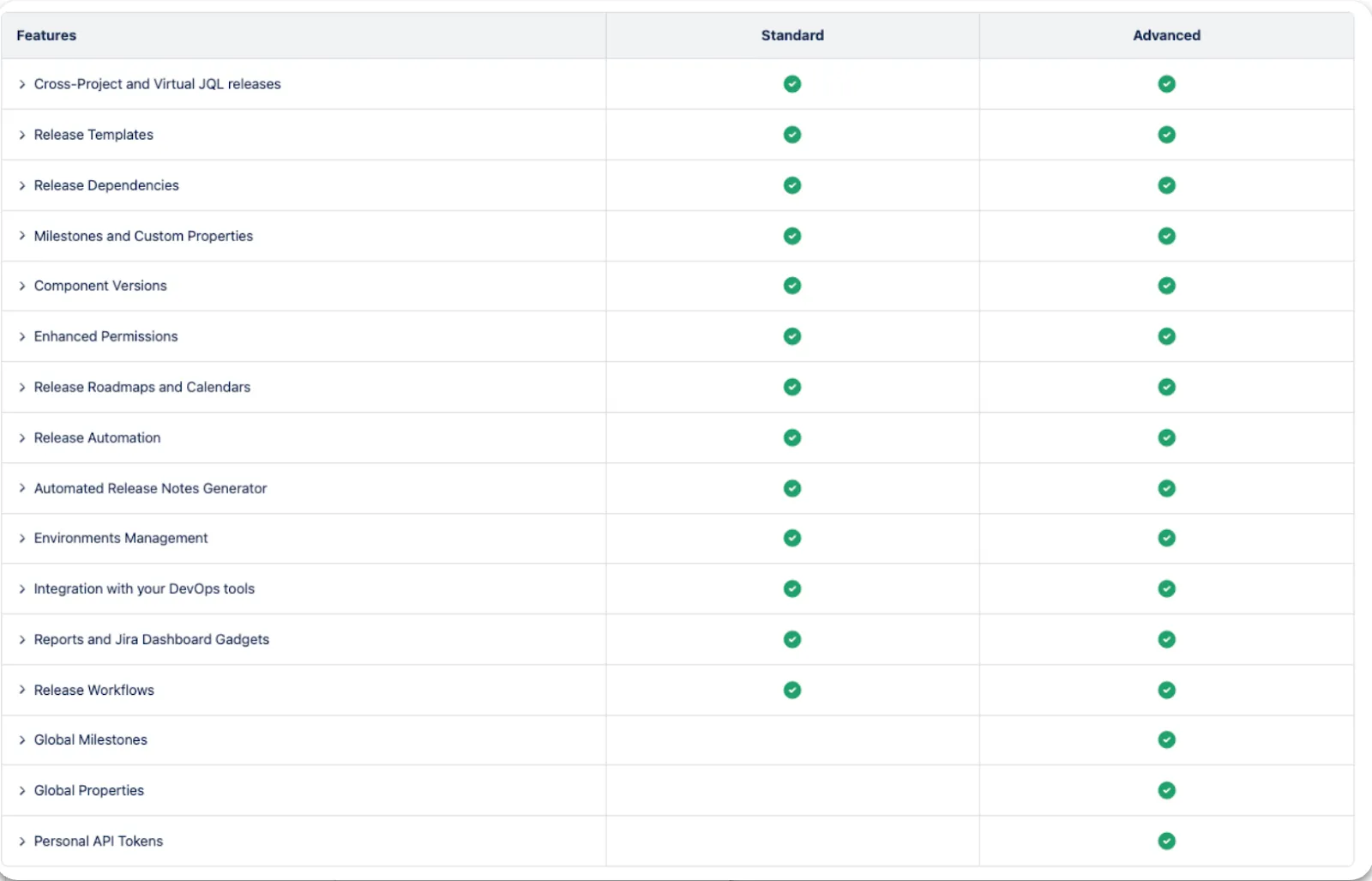
Instead of forcing every customer into a single feature set, editions allow organizations to choose the version that best matches their current needs:
- Standard Edition: core functionality that covers the needs of the majority of teams
- Advanced Edition: premium capabilities designed for more complex, enterprise-level use cases
- Free Edition (coming in the future): a simplified version to help teams get started easily
At Release Management, we have already implemented App Editions across our products.
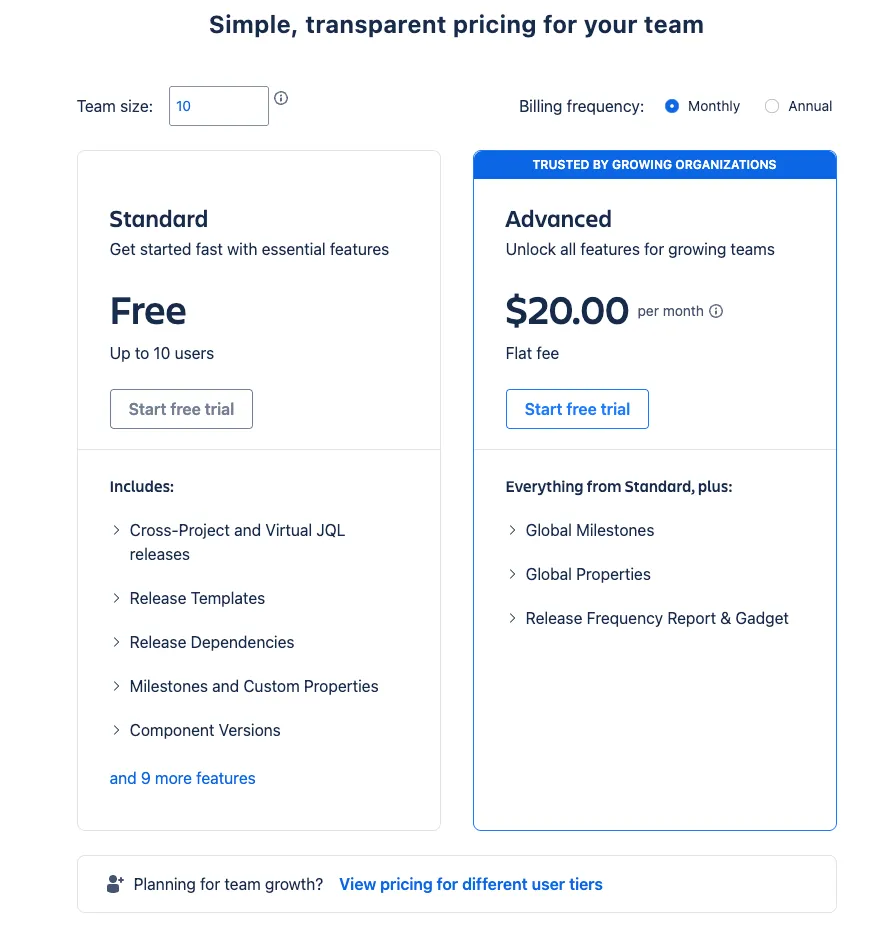
A significant number of customers actively use our Advanced editions. Notably, many new customers initially evaluate the Standard edition and then choose to upgrade once they recognize the value of advanced capabilities.
This demonstrates a strong demand for flexible tiering — where customers can:
- Start with essential functionality
- Validate the solution in their environment
- Expand into more powerful capabilities as their maturity and needs evolve
App Editions are not just about unlocking additional features. They allow customers to access different levels of overall value. For example, customers choosing the Advanced edition may also benefit from premium support, priority SLA, faster response times, and dedicated assistance or consulting hours. For enterprise teams, this combination of enhanced functionality and elevated service often provides significantly greater operational reliability and strategic value.
Customers retain full control over how they start and evolve:
- At the beginning, you can trial either the Standard or Advanced edition.
- If you purchase the Standard edition, you can activate an Advanced trial at any time to evaluate premium features.
- After using Advanced, you can downgrade back to Standard if your needs change.
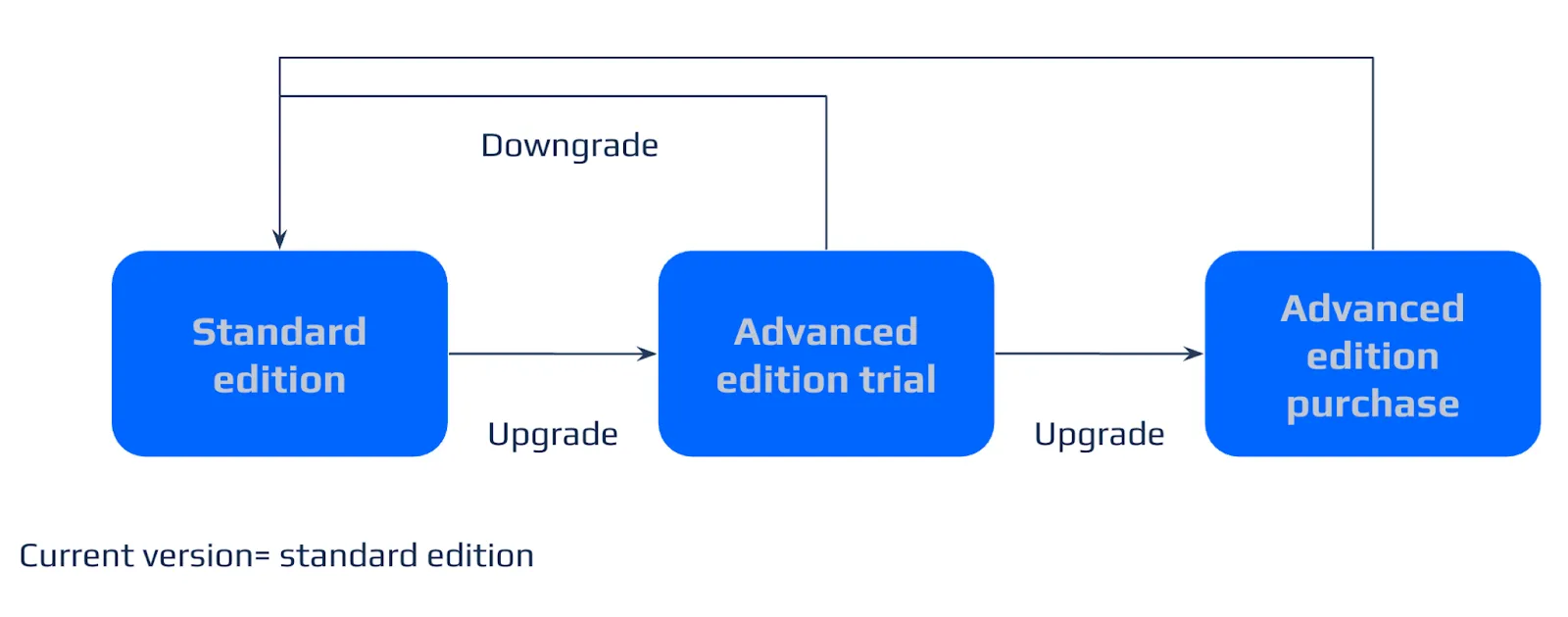
This flexibility ensures that you’re never locked into a tier that no longer fits your organization. Instead, the app grows with you.
Usage-Based Billing
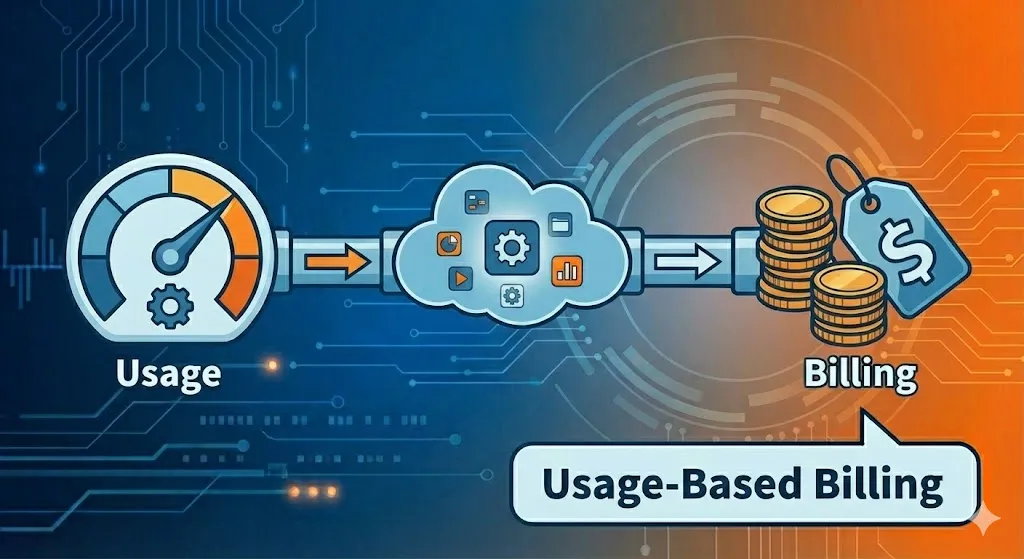
As of early 2026, this capability has not yet been launched, but it is already included in the Marketplace team’s product roadmap and is expected to roll out in the coming months.
The most efficient and fair way to price an app is based on actual usage and the value it brings to an organization, rather than the number of licensed users. Usage-based billing introduces this flexibility.
With this new capability, Marketplace partners will be able to define key usage metrics that reflect the true value delivered by the app. In the context of Release Management, such metrics might include:
- Number of completed releases
- Number of generated release notes
- Number of engaged environments
- Number of automation jobs run
- Or any other operation that represents meaningful value consumption
Billing can then be calculated per usage unit or per operation, ensuring that customers pay in direct proportion to how much they actually use and benefit from the app.
This approach completely shifts the pricing conversation away from user counts and eliminates the challenges inherent in user-based licensing — where user roles vary significantly and charging the same price per user is often not optimal.
It also becomes especially valuable with the rise of AI adoption, where operating costs can be significantly higher. Usage-based billing provides a more accurate reflection of these operational expenses while ensuring that customers are charged appropriately for the value delivered.
From our side, we definitely see usage-based billing as the most preferred and future-proof pricing model for Release Management.
Bundles
The final upcoming change — also highly requested by the community — is the introduction of bundles. With this capability, Marketplace Partners will be able to offer packaged solutions in two formats:
- Single-vendor bundles: multiple apps from the same vendor grouped together
- Multi-vendor bundles: apps combined from multiple vendors
This evolution supports Atlassian’s broader strategy of serving enterprise customers, who increasingly prefer purchasing complete solutions rather than assembling a set of loosely connected applications on their own.
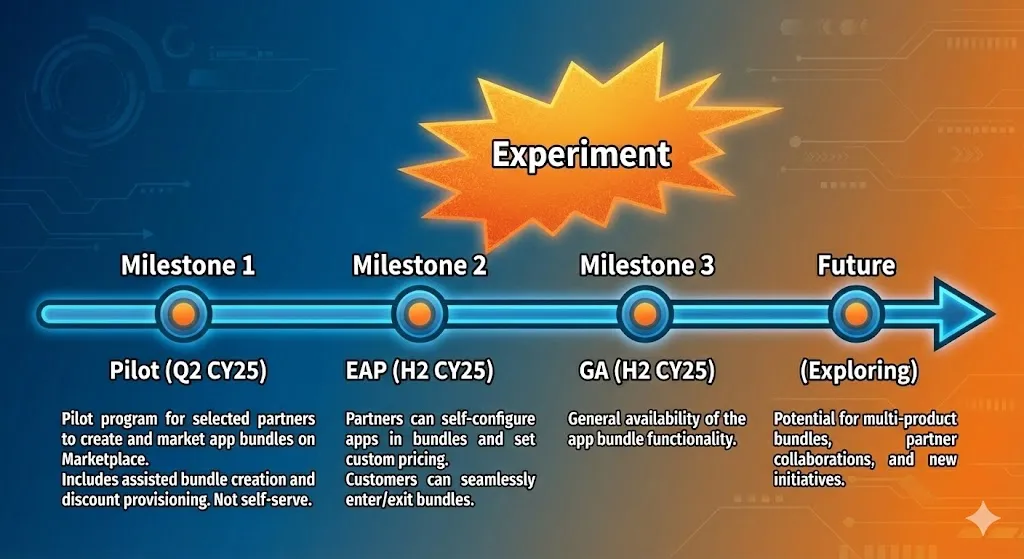
Atlassian is currently running experiments with different bundling approaches to determine the most effective model for both customers and partners. We expect this capability to become available, enabling:
- Better, more holistic solutions
- More predictable procurement processes for enterprise buyers
- Preferential pricing when purchasing multiple apps
- Stronger customer loyalty and deeper adoption across product ecosystems
In addition, there are insider comments suggesting a strong likelihood that Atlassian will eventually introduce cross-partner bundles. This would allow multiple Marketplace vendors and Solution Partners to combine their offerings into a single, cohesive package — including Marketplace apps from different vendors, professional services, education and certification programs, and high-end advisory services from top-tier Solution Partners.
Such an ecosystem-level approach would enable partners to “connect the dots” and deliver complete, turn-key solutions — not just tools, but outcomes.
What It Looks Like in Practice

Let’s take a concrete example. Imagine a company running Jira Cloud Enterprise with 13,000 users across three instances, plus Jira Service Management (JSM) Premium with 1,000 agents.
Under the new licensing model, different apps can follow different pricing rules:
- Some apps are priced based on the total number of unique users across all instances — thanks to multi-instance licensing, users appearing in multiple instances are counted only once.
- Some apps are priced only for the subset of users who actually use the app, taking into account specific app editions (e.g., Standard vs. Advanced).
- Some apps are priced per agent, such as those integrated with JSM, counting only licensed JSM agents rather than all Jira users.
- Others follow a usage-based billing model, charging for measurable consumption — such as automation runs, workflow executions, or AI requests.
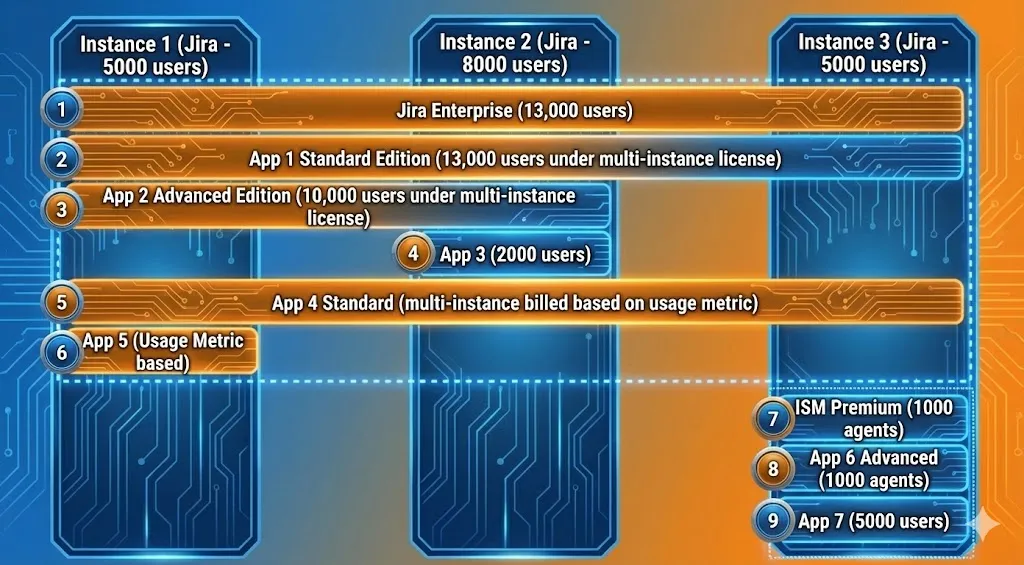
In short, a single large enterprise may simultaneously use apps that are priced per unique user, per subset of users, per agent, and per usage. This creates a much more flexible, fair, and value-aligned licensing landscape for both customers and Marketplace partners.
What Does It Mean?
The biggest benefit is more control over what you pay for. With the new pricing models, organizations can tailor licenses to different groups of users and pay only for what is actually needed — avoiding the massive overpayments that are common today.
Customers will also have more choice and flexibility. You can start small with a Standard edition, test what works, and upgrade to an Advanced edition when the time is right — without committing to unnecessary features upfront.
Final Thoughts
Atlassian’s new pricing model is not just a technical shift — it’s a cultural transformation. It marks a move away from selling “seats” and toward selling value.
Yes, there will be confusion at first (there always is). But over time, this model should make life easier for everyone:
- Customers pay for what they actually use
- Vendors can price apps more fairly and sustainably
- The ecosystem grows without endless debates about why apps cost so much or why licenses must cover all users
We’ll continue sharing our experiences as we roll out our own editions and adapt to the new model. Want to see how these pricing changes affect your team? Reach out to us at Seibert Solutions for assistance with Atlassian license management.