

How is AI currently reshaping service management?
AI has evolved from a buzzword into a practical tool used by 88% of organizations to improve decision-making (80%) and customer service (79%).
By automating workflows and providing predictive analytics, AI enhances employee productivity for 78% of businesses, becoming the backbone of modern service operations through speed, accuracy, and consistency. Artificial intelligence is no longer an abstract concept for service teams — it is an everyday reality shaping how organizations deliver value and support employees.
Drawing on findings from Atlassian’s State of AI in Service Management 2024 report, it is clear that AI is quietly transforming the speed and accuracy of everyday tasks. While integration is accelerating, success remains a mix of technical capability and cultural adaptation.
Which departments are leading AI adoption?
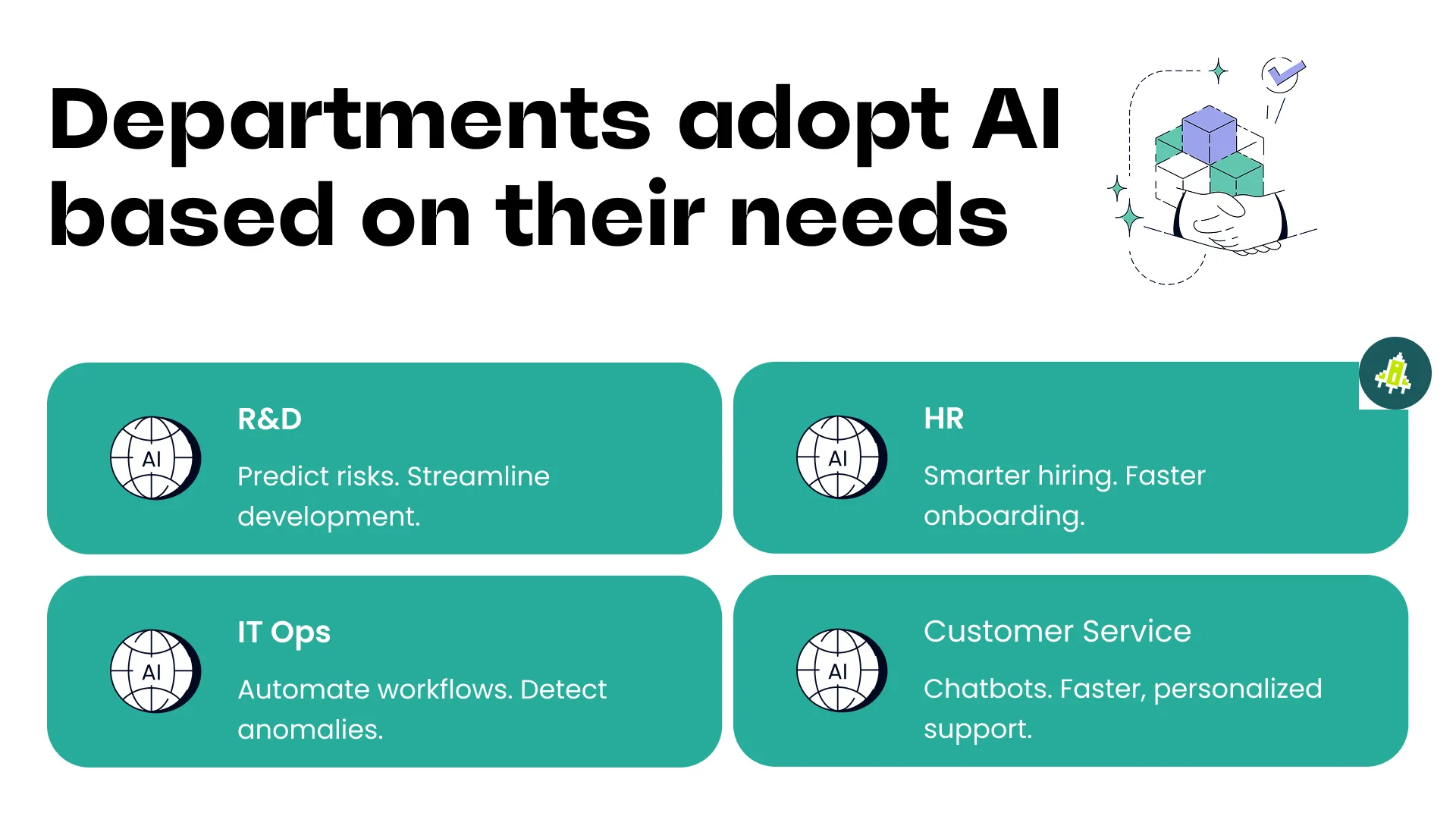
R&D departments lead AI adoption with 62% in the optimization stage, followed closely by IT Operations.
While R&D focuses on risk forecasting and project scheduling, IT and HR leverage AI for virtual agents, anomaly detection, and recruitment analytics. However, Natural Language Processing (NLP) remains an underutilized potential across all sectors.
Why are organizations adopting AI in service management?
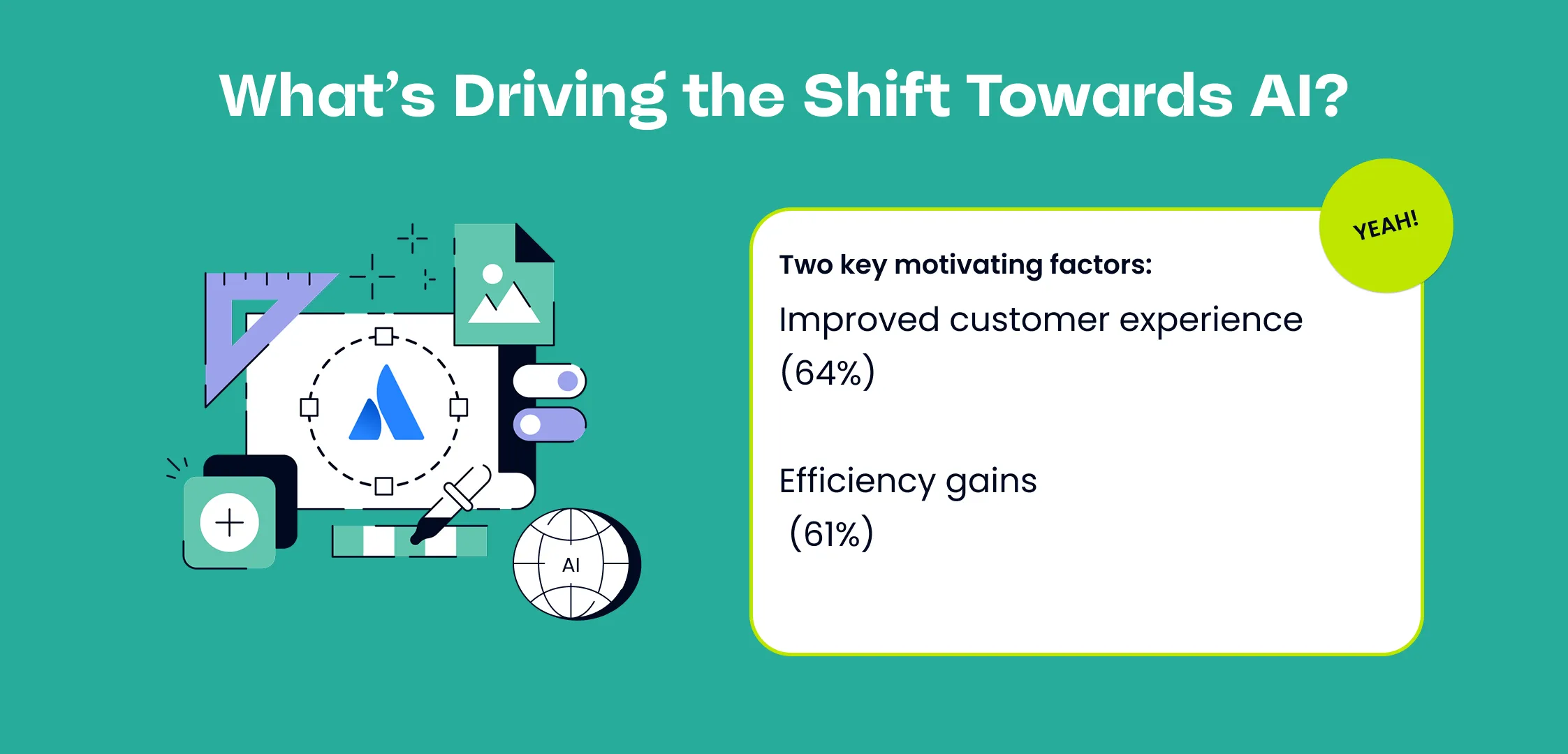
Organizations adopt AI primarily to improve customer experience (64%) and gain operational efficiency (61%). Additionally, 57% of leaders use AI-driven insights to move toward smarter, data-driven decision-making.
The focus has shifted from whether to use AI to how to use it more effectively for personalized interactions.
Leaders are increasingly recognizing that AI isn’t just about simple automation; it’s about enhancing responsiveness. By embedding AI into existing workflows, teams can create smoother, more personalized interactions for both customers and employees, which is a significant driver for the 89% of organizations planning to expand investments next year.
What are the main challenges in AI implementation?
The primary obstacles to AI maturity are data privacy and security concerns (72%), followed by a shortage of skilled talent and budget constraints. Furthermore, 64% of companies struggle to quantify the return on investment (ROI), as benefits often appear indirectly through improved service quality or faster resolution times
Despite these hurdles, progress is not halting. Organizations are becoming more strategic, with approximately half of all surveyed companies conducting needs assessments and improving data readiness before deployment. This deliberate approach helps mitigate the complexity of integration and builds long-term AI fluency within teams.
What are the future investment priorities for AI?
Future AI investments focus on employee upskilling (49%), enhancing customer experience (48%), and expanding data analytics (43%). There is a clear shift from experimentation to optimization, with 50% of organizations actively refining existing solutions to ensure sustainable integration and technical infrastructure.
Successful AI adoption is not about replacing people but empowering them. When used strategically, AI allows teams to focus on higher-level problem-solving and creativity while algorithms handle repetitive data analysis. This balance of innovation and human insight is crucial for responsible governance and continuous learning.
How does Seibert support AI-powered workflows?
Seibert helps organizations integrate AI seamlessly through modern Service Management solutions like Atlassian Rovo, Google Gemini, and Miro AI. By embedding AI directly into tools like Jira, Confluence, and Google Workspace, Seibert enables smarter collaboration, faster information synthesis, and more transparent, data-driven decision-making.
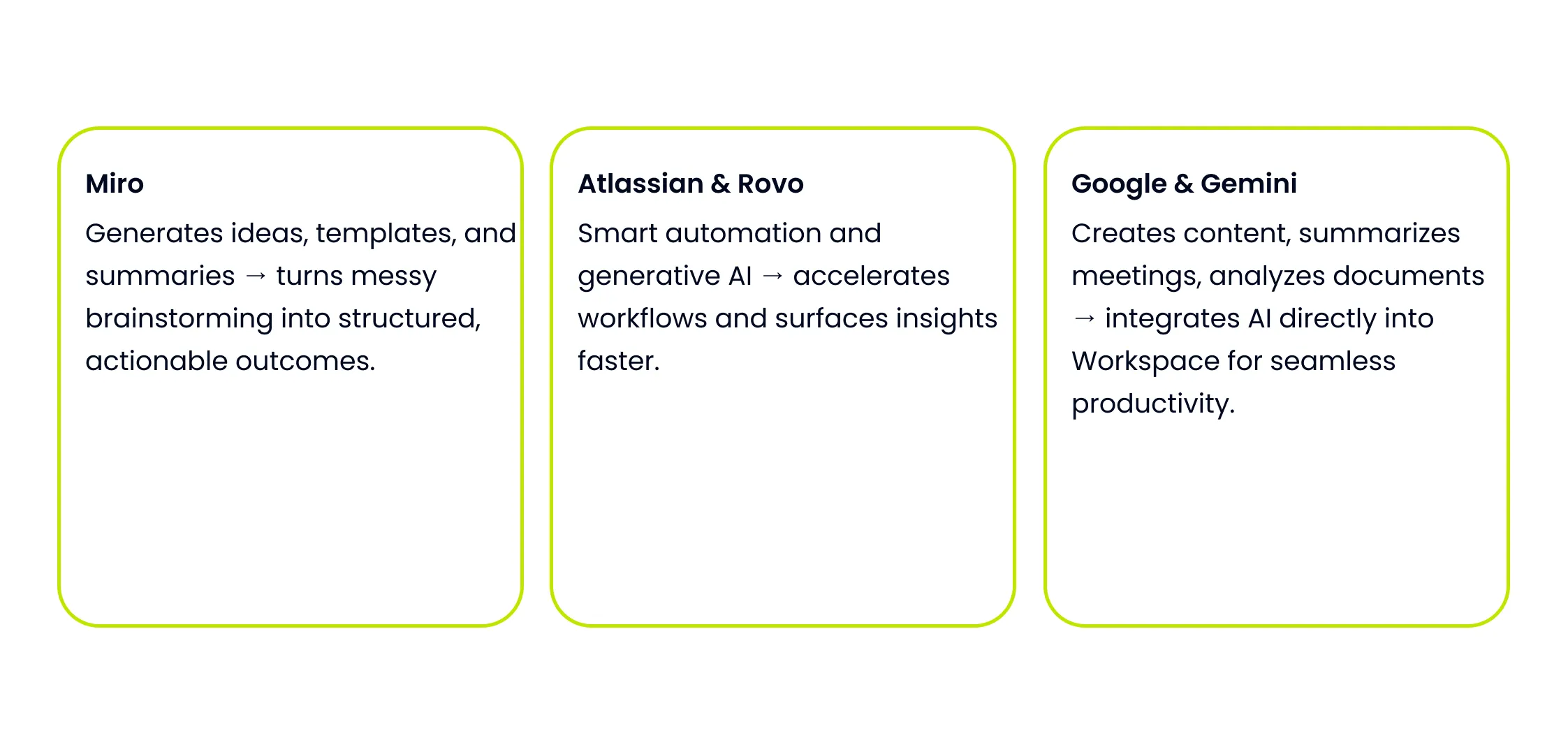
- Miro AI: Speeds up workshops by turning brainstorming sessions into actionable outcomes.
- Atlassian & Rovo: Accelerates decision-making with generative AI embedded in Jira and Confluence.
- Google & Gemini: Enhances productivity by analyzing documents and summarizing meetings directly in Workspace.
Interested in bringing AI to your service management workflows?
The State of AI in Service Management 2024 makes one thing clear: the AI journey isn’t just about technology. It’s about creating connected, intelligent systems that empower people to think, create, and act together. With thoughtful implementation — and the right partners — the promise of AI in service management is well within reach.
Learn more about how Seibert helps organizations modernize their systems and unlock AI’s potential across teams.