A service management practice built for your organization
Every request in one place: employees know where to ask, each team sees exactly what's theirs, answers come faster, and leaders can finally see the work.
- All open
- Assigned to me
- IT
- HR
- Facilities
- Breached SLA
Trusted by teams at Fortune Global 500 companies




Confusion grows and customers wait longer as requests pile up from various sources.
No one sets out to work this way. It just grows: a shared inbox here, a chat channel there, and the colleague who always knows who to ask.
The inbox is the to-do list
Requests sit in a shared mailbox, and whoever opens one first owns it, or nobody does.
Chat is a side door
Quick asks in Slack and Teams skip the line, and the details stay buried in the thread.
Walk-ups jump the line
Whoever stops by the desk gets help first. Everyone else waits without knowing how long.
Nobody sees the whole picture
No counts, no response times, and no way to show leadership what the team really handles.
One front door, one queue, clear owners
Service management gives every request the same path: in through one front door, over to the team that owns it, answered on time.


What changes when every request has one home
- 30%
- of tickets resolved by self-service by year three, before they reach an agent
- 30%
- more efficient ticket handling for service agents
- 25 min
- saved per request for employees, at most
- 275%
- return on investment over three years
Source: Forrester Consulting, The Total Economic Impact of Jira Service Management, commissioned by Atlassian (composite organization of five customers). Read our summary
In our customers' words
Renewable Energy
“The Seibert U.S. team has been great to work with. They are responsive, knowledgeable, and helpful.”
17 years
As an Atlassian partner
Urban Transit Services
“It's been a major advantage having access to both reliable, high-quality apps and a team that understands our broader Atlassian ecosystem.”
IT Services
“We get exactly the support that we need. And in most cases that's within hours.”
US-based
Service management consultants
A new tool alone won’t fix it
ITIL 4, the most widely used service management framework, looks at four sides of the problem. We work on all four, not just the software.
1 · Organizations and people
Nobody knows who owns what
We map who handles which requests, set up support tiers and approval chains, and train your agents so the new way sticks.
- Roles, queues and escalation paths
- Agent and admin training
2 · Information and technology
Requests live in five different apps
We bring requests, assets and answers into one system and connect it to the email, chat and sign-in tools you already use.
- One service platform with a knowledge base
- AI agents that answer the easy questions
3 · Partners and suppliers
Vendor tickets go dark
Contracts sit next to the assets they cover, and escalations to suppliers stay on the request, so you always see where things stand.
- Supplier escalations tracked on the request
- Ongoing admin help through a Fractional Atlassian Admin
4 · Value streams and processes
Every request handled differently
We set up workflows for the requests you get most, with response times and automation that match your priorities.
- Requests, incidents, problems, changes and more
- Response targets and automation rules
At the center · Value
What your teams get out of it
Faster answers for employees, fewer repeat questions for agents, and numbers you can show leadership.
Many of your departments have the same problem
The same service desk can work for every team that takes requests, each with its own forms, queues and approvals.
How can we help?
Search for answers or raise a request
From scattered requests to one service desk
Six steps, whether it’s your first service desk or a move from ServiceNow or another tool.
Click a step to see what happens in it.
Step 1 of 6
Assess
We look at your overall service management process, gather requirements from the teams involved and find out where requests get stuck or missed, so we know where to start.
Step 2 of 6
Design
A blueprint for your service desk: how requests come in, who handles them, response targets, automation, integrations and more.
Step 3 of 6
Stage
We build it in a test environment with sample data, so you can click through before anything goes live.
Step 4 of 6
Test
Your agents work real requests with us, and we check integrations and performance under load.
Step 5 of 6
Deploy
Data migration, final setup and a go-live plan with a way back if anything goes wrong.
Step 6 of 6
Support
Communication planning for the rollout, training and workshops for agents and admins, and fast fixes for anything that comes up early on.
Planning your service desk
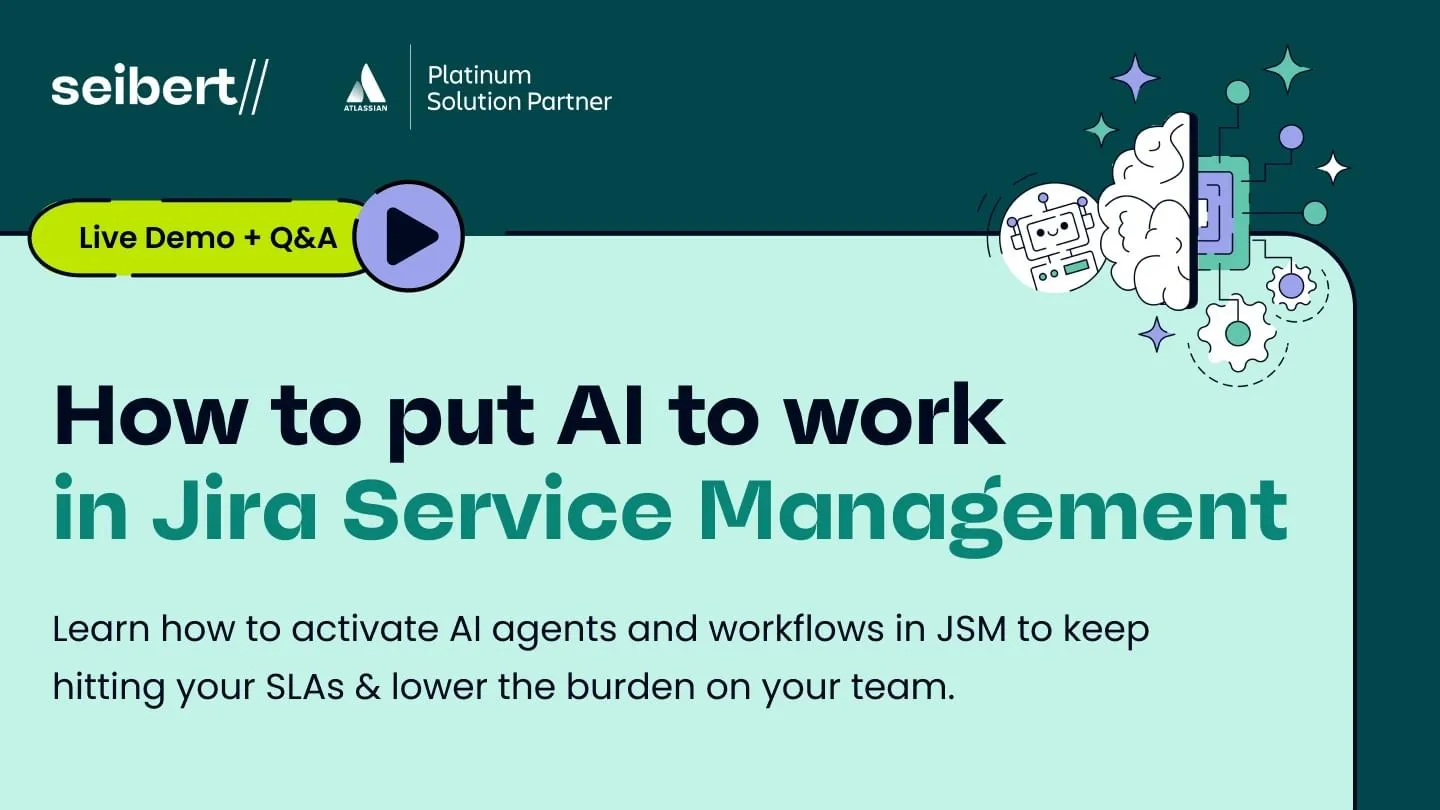
Webinar recording
How to Put AI to Work in Jira Service Management
A live look at the AI already in Jira Service Management: AI agents handling incoming requests, FAQs that answer questions before a ticket is created, and a custom Rovo agent built live, plus Q&A.
Loading content...
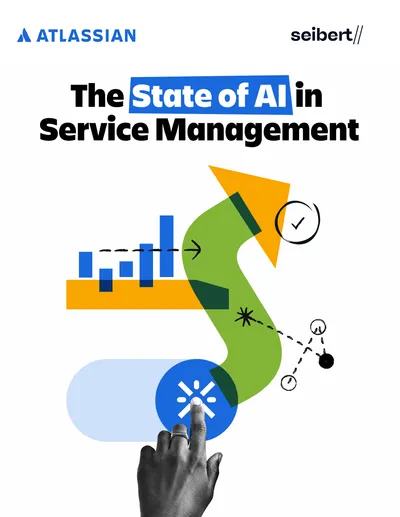
Report · 63 pages
The State of AI in Service Management
A survey of 500 professionals on how teams use AI in service management: what drives it, what holds it back and the impact so far.

Free whitepaper · 18 pages · PDF
How Facilities Teams Run Smarter with ESM
Why facilities is a natural place to start with service management, with before-and-after scenarios and a 90-day roadmap.
Loading content...
Resource library
Guides, whitepapers and customer stories from real projects and more.
Browse resourcesFrequently Asked Questions
What do our service management services include?
Every project is scoped to your unique needs. Typically we look at how requests reach your teams today, design the workflows, set up the platform, move your data over, train agents and admins, and support you after go-live.
What's the difference between IT service management and enterprise service management?
IT service management (ITSM) is how IT handles requests, incidents and changes. Enterprise service management applies the same approach to HR, Facilities, Finance and any other team that takes requests.
Which platform do you use?
Jira Service Management from Atlassian. It covers requests, incidents, problems, changes and assets, follows ITIL 4, and works for teams outside IT too. Plans and prices are on our JSM licensing page.
Can we move from ServiceNow?
Yes. See how the two compare on our JSM vs. ServiceNow page, and we'd be happy to plan the move with you.
How much does a service management implementation cost?
It depends on your team size and custom requirements. Book a discovery call to learn more. Licenses are billed separately.
Get support for your service management transformation