

There’s inherent complexity and the understandable fear of control loss that arises when scaling release management processes within large organizations operating intricate systems.
To address this, our last article on release management in Jira shared the essential foundations, or “building pillars,” required to instil confidence at scale:
- Designing for Continuous Delivery
- Clear Ownership of components and releases
- A Standardized Release Flow
- Automation as the essential backbone
While these pillars are crucial for stability, they only represent the baseline of control. The true promise of an efficient, scaled release management process lies in what we build on top of them.
Here we go! This article moves past stability and into advanced optimization. We will now discuss the strategic frameworks, organizational alignment, and advanced techniques required to leverage these foundations and achieve the ultimate gains in speed, predictability, and business value through truly efficient release management at an enterprise scale.
Observability, Feedback Loops and Organizational Alignment
The true efficiency and confidence of a release management process depend on how quickly and accurately information flows through the organization: how fast it’s shared, how easy it is to access, and how reliable it is.
Effective information flow enables strong feedback loops and aligns teams that might otherwise operate in silos.
Metrics
Metrics are essential to measure the health and effectiveness of your release management process over time.
Health checks and DORA metrics have become de facto engineering standards for this purpose. Health checks and DORA metrics you can get in Atlassian Compass out of the box can be seen below:
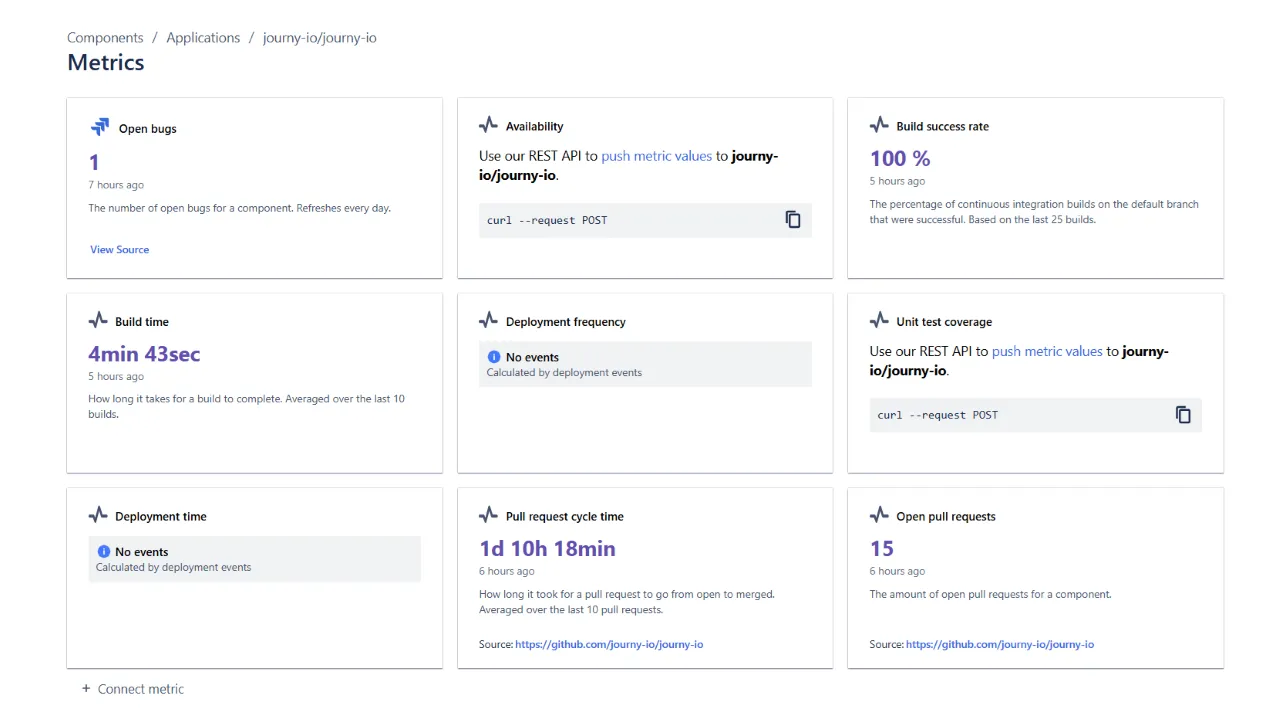
Tools like Atlassian Compass, the Release Management App, and other Marketplace solutions can help build accurate, real-time dashboards and performance indicators.
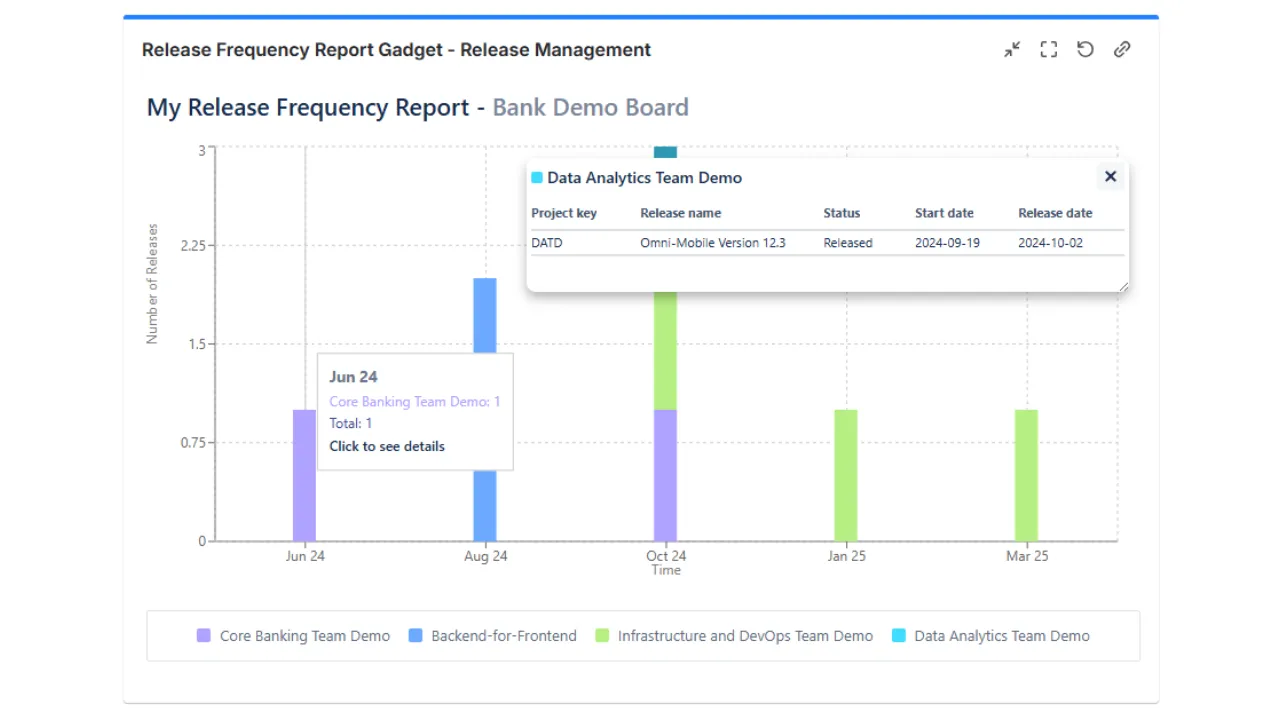
Status and Progress Dashboards
Metrics are only part of the story, usually more technical. Teams also need to know, “What’s the status?” and “Where do we stand with the progress?” Release status dashboards as information radiators, make release information visible, unified across organization and most important — actionable.
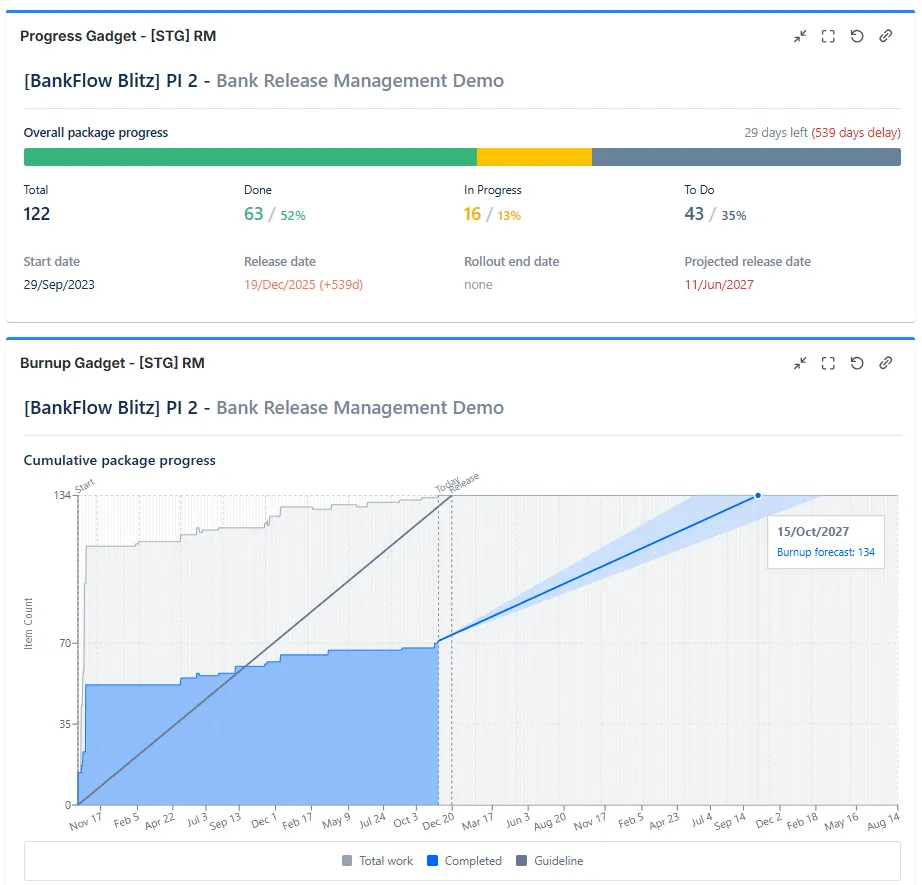
Insights from Atlassian Compass and the Release Management App allow organizations to create unified information radiators that foster transparency across teams — and even with selected external stakeholders.
Available AI Agents
Information radiators are powerful, but they often spark follow-up questions. That’s where AI assistants like Atlassian Rovo and the Rovo engine built into the Release Management App become valuable.
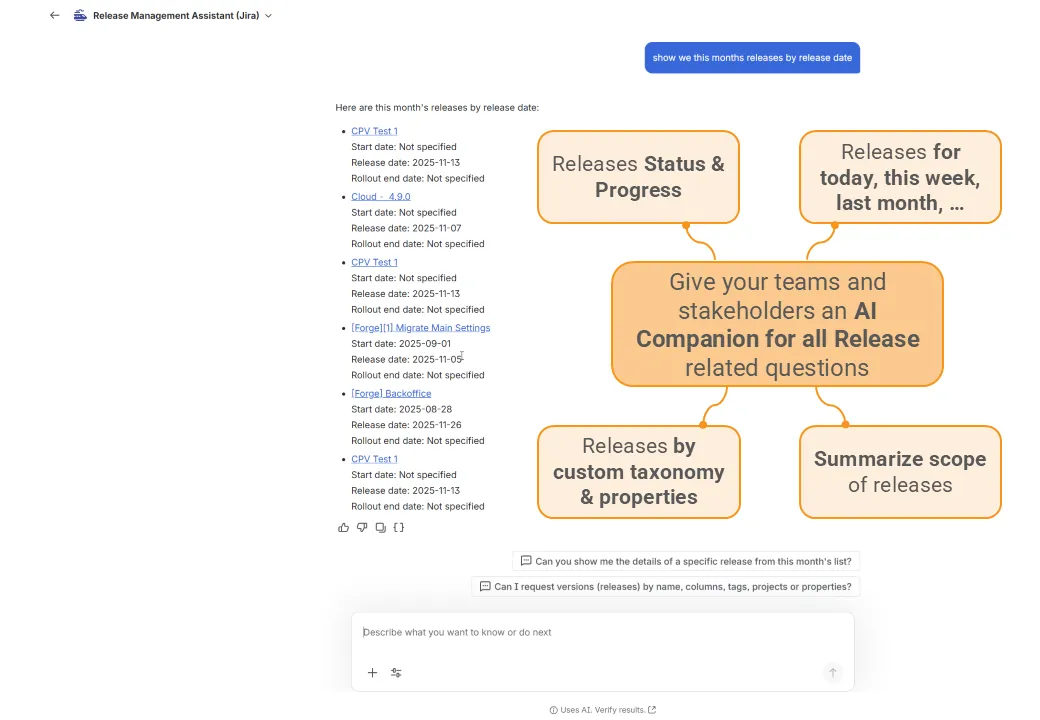
They help users navigate details, clarify dependencies, and quickly surface context, saving time and enhancing organizational alignment.
Shared Release Calendars and Roadmaps
While leveraging Status and Progress Dashboards and even AI Assistants effectively fosters internal team alignment, this focus on the inside is often insufficient. In many cases, external stakeholders are equally important and require shared visibility to maintain alignment and trust.
Therefore, the capability to easily export and share customer- or partner-facing release calendars and roadmaps is critical for successful scaling. This is not a luxury; it’s a competitive necessity.
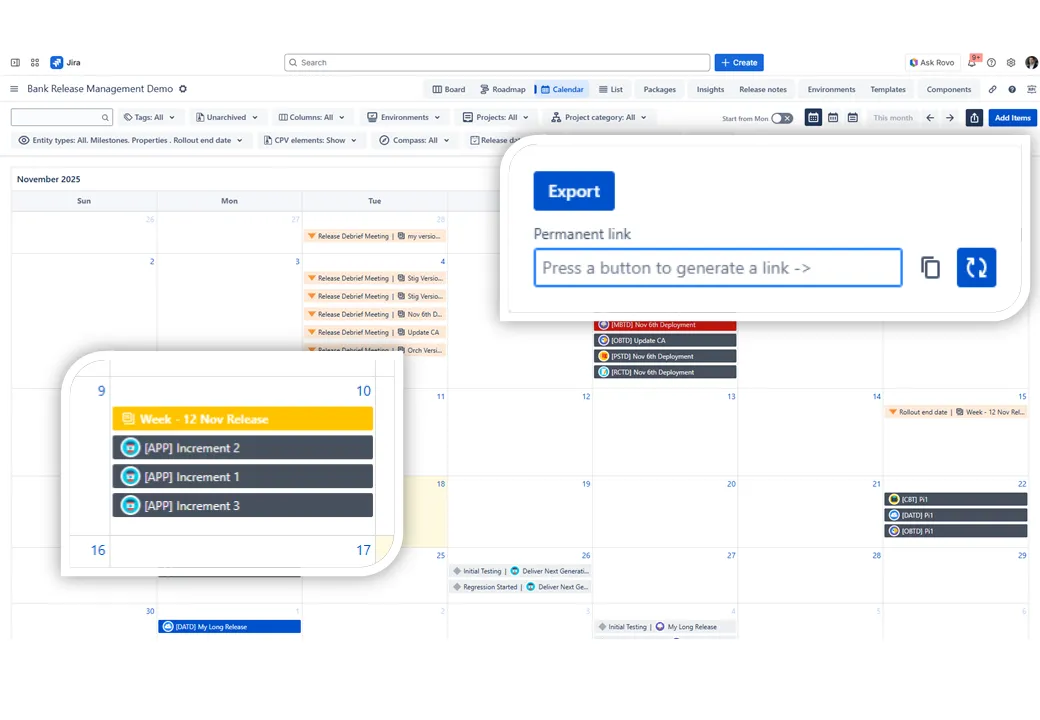
Fortunately, tools like Atlassian Premium features and specialized Release Management Apps provide this essential integration. These solutions allow you to seamlessly embed release calendars into corporate calendar tools and securely share a tailored view of your roadmap with your external ecosystem.
Versatile Release Notes
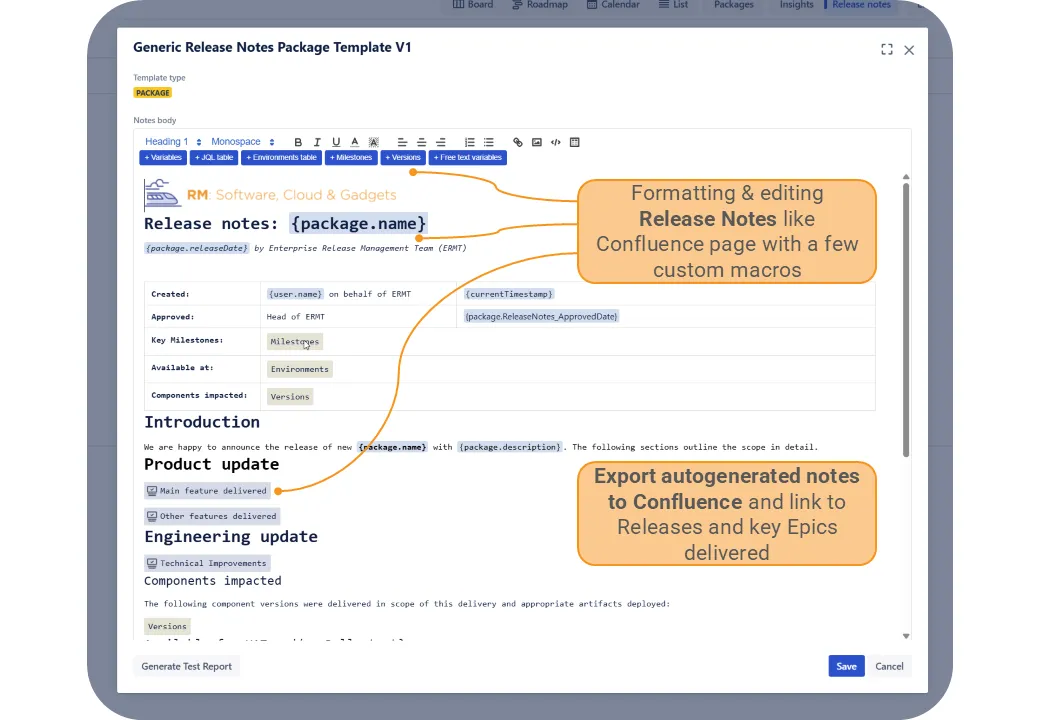
Finally, every release management process must end with clear communication. High-quality, data-driven release notes inform internal and external stakeholders about new features, changes, and usage guidance.
In distributed environments, these notes may require localization, client-specific customization, and automation.
The Release Management App’s Release Notes feature, along with other Marketplace tools, can streamline this process — ensuring consistency, accuracy, and minimal manual effort.
Scaling Your Release Management Process Without Losing Control
The fear of losing control while scaling often leads organizations down the wrong path — implementing more manual processes, adding limits, and introducing extra controls that ultimately slow down end-to-end delivery.
The real solution looks almost the opposite. It’s built on a few key foundations: designing for delivery, empowering teams with autonomy but structured ownership and traceability, and integrating products with alignment and automation in mind.
Together, these create a powerful ecosystem that drives observability, feedback loops, and organizational alignment — and with them, the confidence to scale without losing control.