Skip to content

Delegate your routine IT tasks to AI agents.

AI agents take requests in Slack, Google Chat or your chosen platform, open a ticket, collect missing info and resolve routine requests independently.

Your best IT people lose time to work that needs no specialist

Updating user permissions, granting software access, answering frequently asked questions and other routine tasks waste the time of your best IT people.

Step 1

Taking requests

Your team asks follow-up questions, routes requests and responds to questions whose answers are already in the knowledge base.

Step 2

Working tickets

Repetitive, error-prone manual workflows take more time to resolve than anticipated, all because no API exists to automate the work.

Step 3

Writing knowledge back

What the team learns on solved cases gets lost, because keeping the knowledge base up to date falls down the priority list.

Results from Seibert’s internal IT team

Our own IT team takes support requests through the @helpme bot in Google Chat. It answers 22 self-service topics on the spot, opens tickets itself and hands routine work to agents on Taskmate.

1,860
requests from 273 colleagues
614
tickets the bot opened itself
500+
tickets closed with no human touch
117
inactive licenses reclaimed on their own
Data collected from Seibert’s IT team since January 2026.

How agentic IT support works

AI agents take over routine work in three steps. For each one, you decide whether the AI supports your team or handles cases itself, and you can change that per request type.

Step 1 of 3

Taking requests

An agent responds to an incoming IT request, asks for missing details and searches your knowledge base for answers. If the answer exists, the request is completed. If not, the agent creates a ticket and triages it to the right team.
Human firstA member of your team monitors the inbox, creates a ticket, and works on it or routes it.
AI firstThe ticket is routed to the correct AI agent or team for resolution.

Step 2 of 3

Working tickets

An agent classifies the ticket and adds context, including asking the requester for more information. Specialized agents handle routine work such as access, licenses and accounts directly in the target system, following a runbook, and use the browser where there's no API.
Human firstThe ticket is sent to an approver and an IT staff member: a manager approves the request, and IT carries out the task.
AI firstThe agents work the tickets themselves and escalate when a deadline passes or an approval or decision is needed.

Step 3 of 3

Writing knowledge back

After a unique request is resolved, an agent checks whether something new was learned and drafts an article or runbook. It also finds and updates duplicate or outdated articles.
Human firstAn IT team member documents the request or incident and how it was resolved.
AI firstThe knowledge base updates itself, and only disputed changes go to a person.

Autonomy is configurable: you can choose which tasks need human intervention and set that requirement per request type.

With or without Atlassian

A ticketing system sits at the center: Jira Service Management, or another system such as ServiceNow, Zendesk or Ivanti.
In the Atlassian stack
Rovo and built-in automation, and Forge apps where the built-in tools stop.
TaskmateBeyond Atlassian
n8n to connect any system, and Taskmate, our platform for agents that work in your systems, even through the browser.
The AI runs preferably in Google Cloud, or with IONOS or in an AI environment you already have.

Offerings and packages

Start with a one-time project to get going, or opt for ongoing support for Agentic IT configuration and operation.

Getting started

Map your current IT maturity and get started with agentic AI.
Service desk assessment
Assess where your service desk stands and where AI can help you.
Autonomy analysis
Sort out which request types agents can take responsibility for.
Service desk workshop
Your team and ours shape the future of your service management process.
Taskmate proof of concept
Agents working real cases in your own systems.

Rollout

Get support with Agentic IT deployment and adoption.
Service intake in chat or the help center
Set up requests to be worked by AI agents in Slack, Teams or your portal of choice.
Service handling
Let agents work routine tickets, in JSM or with Taskmate and your desired ITSM platform.
Knowledge cycle
AI agents update the knowledge base from successfully resolved tickets.
Knowledge base design and bootstrap
A knowledge base built for agents and humans, so that everyone can find the information they need.

Operations and support

Managed and ongoing support and consulting services.
Agent maintenance
Keeping your agents and runbooks current.
Ongoing consulting
A regular sounding board for the next step in your AI transformation journey.
Platform operation
We run n8n and Taskmate for you, if you'd rather not.
Start at any step
Taking requests, working tickets or writing knowledge back: each one is a valid place to begin.
Some offerings go together
Chat intake, for example, runs on n8n and an AI environment. We can operate those for you, or advise your team on the setup.
Not sure where to begin?
The getting-started offerings answer that for most teams. Starting directly with a rollout works too; we'll build in a short clarification phase to understand your organization.

How we deliver

We partner closely with your team, and offer as much hands-on-keyboard support as your team needs.

1

Kickoff

We clarify open questions, document what we agree upon, and decide together how often we meet and how we stay in touch.
2

Build in steps

You see results early, and your feedback shapes the next step instead of surfacing at acceptance. Your team learns how it all works along the way.
3

Handover

An operations manual, training for the people who run and use the solution, and the reasoning behind every decision we made.
4

The next step

Working closely with your team, we see where the next opportunity for improvement is and suggest the offering that fits.
We stay current
Rovo, n8n, Taskmate and other AI tools gain new capabilities all the time. Keeping up is our job, so the path from the last project isn’t automatically the one we pick for yours.

Frequently Asked Questions

What's the difference between Human first and AI first?

With Human first, the AI supports your team: it asks, researches, prepares and suggests, and a person decides. With AI first, specialized agents handle cases on their own and escalate approvals, exceptions, and special cases to your team. You can choose which approach you prefer per step and per request type.

Do we need Atlassian?

No. A ticketing system sits at the center: Jira Service Management in the Atlassian stack, or another system such as ServiceNow, Zendesk, Ivanti, or ClickUp. In Atlassian, we build with Rovo, automation and, where needed, Forge apps; outside it we'll build with n8n and Taskmate, our own software for agents that work in your systems.

Where does the AI run?

Preferably in Google Cloud, but it can also run with IONOS or in an AI environment you already have.

What do the agents need to give good answers?

A knowledge base designed with AI agents in mind. Agents will draw from what's written there, so articles should be up to date, have an owner, ideally live in one place, and be written and structured for ease of use and reading by AI tools.

What does it cost?

Every project is scoped to your needs and depends on the offerings you choose. Book a discovery call to learn more.

Get support for your agentic IT transformation
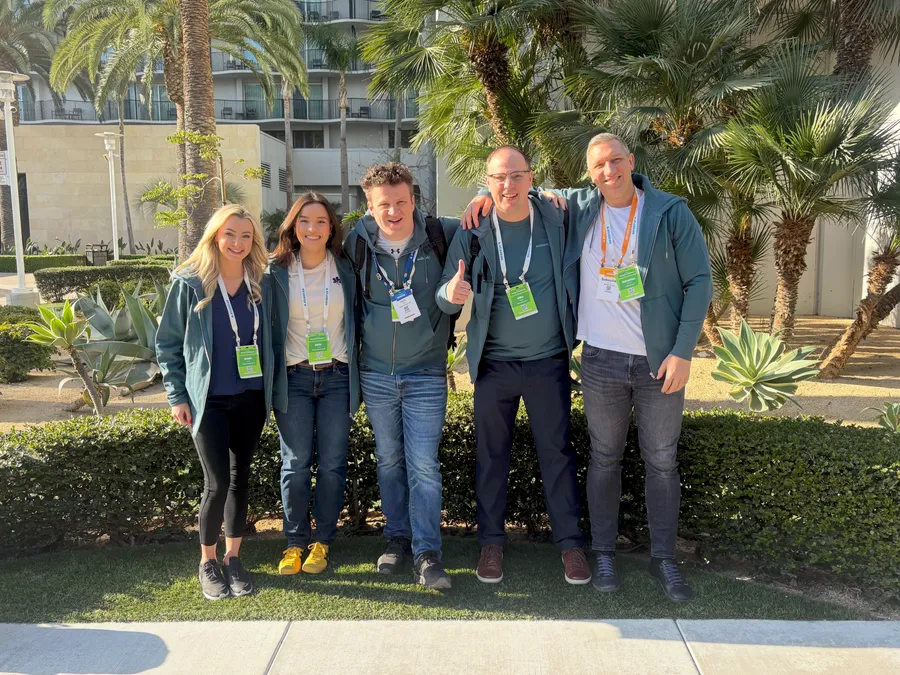
The Seibert Solutions US team

Seibert Solutions US

Talk to real people on our US team.

619-793-4456sales-usa@seibert.group